
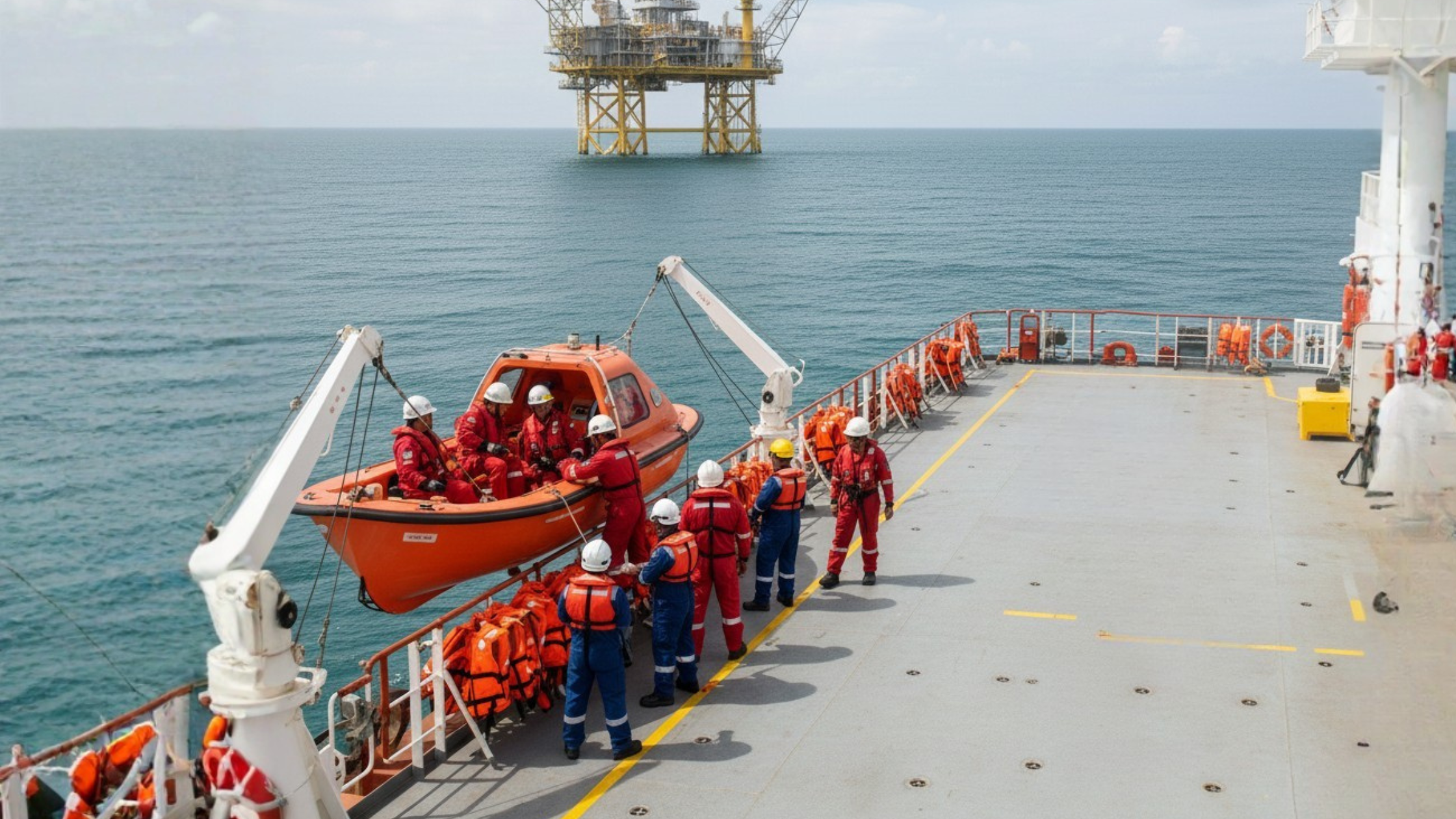
Working offshore is not like working anywhere else. Whether it is an oil and gas installation, a support vessel, a drill ship, or a heavy construction project, the environment demands a level of training and awareness that goes far beyond what you find on most vessels. High seas, heavy machinery, helicopter transfers, confined spaces, and complex operations all create a workplace that is fast moving and unforgiving if something goes wrong.
This is why STCW training is at the heart of offshore safety. It gives crews the skills, confidence, and awareness they need to work in high risk environments and respond properly to emergencies.
At Stream Marine Training, we see the difference it makes every day. When training is hands on, realistic, and taught by people with real offshore experience, it becomes more than a certificate. It becomes part of how you think and how you operate.
Why STCW Training Matters Offshore
Offshore risks are different
Crew working offshore face risks that are not found on standard commercial vessels. The work is more industrial, the equipment is heavier, and the potential for fire, collapse, flooding, or loss of power is far higher. That is before you consider weather, distance from shore, and long crew rotations.
Because of this, offshore workers need training that prepares them for a wider range of situations. STCW provides the baseline foundation.
Operators demand full compliance
Most offshore employers will not let you step on site without valid STCW certification. This is not optional. It is part of the safety culture that keeps offshore installations running without incident.
Having the correct certificates protects everyone on board and ensures the crew around you are trained to the same standard.
The Offshore Focused STCW Modules
Although the STCW Basic Safety Training package is required across maritime sectors, some modules carry even greater importance offshore. These are the ones employers watch closely.
Personal Survival Techniques (PST)
Offshore crews must be ready for abandon ship scenarios in rough conditions. PST teaches you how to survive in the water, board a life raft, and support your team until rescue arrives. In high risk regions such as the North Sea, these skills can save lives.
Fire Prevention and Fire Fighting (FPFF)
Offshore workers operate around fuel, machinery, and electrical systems every day. Fire is one of the biggest risks offshore and spreads quickly in confined industrial spaces. FPFF teaches you how to prevent fires and how to respond when they break out.
At SMT, our fire ground gives crews a realistic experience so they understand heat, visibility loss, and the pressure of working inside a fire team.
Elementary First Aid (EFA)
Medical help offshore is never immediate. EFA trains you to stabilise injuries, support casualties, and buy vital time until a medic or helicopter can assist.
Personal Safety and Social Responsibilities (PSSR)
With people working long shifts in close quarters, safety culture and communication are essential offshore. PSSR reinforces teamwork, personal behaviour, duty of care, and how to operate safely within a larger crew.
Security Awareness (PSA)
Offshore sites are critical infrastructure. Crew must understand how to recognise threats, protect restricted areas, and follow correct reporting procedures.
How Offshore Operations Shape STCW Training
Helicopter transfers
Many offshore workers travel to installations by helicopter. Understanding emergency procedures and how to react during a ditching scenario is vital. While HUET is part of OPITO training rather than STCW, the mindset built within STCW forms the foundation for it.
Heavy industrial environments
Offshore sites combine marine risks with industrial ones. This is why hands on drills, clear communication, and practical modules are so important. Real learning only happens when you feel the pressure of a scenario.
Remote operations
When the nearest support vessel is hours away, the crew becomes the response team. STCW ensures that every person on board can contribute during a real emergency.
Why Offshore Workers Choose SMT
STCW is taught in many places, but the offshore sector needs something different. At SMT, we combine high quality facilities with trainers who have lived the offshore life themselves. They understand the pressure, the teamwork, and the need to stay calm when things get loud, hot, or unpredictable.
Our approach is friendly, confident, and practical. Delegates do not just pass a course. They leave understanding why each skill matters offshore.
They also tell us the same thing. Training at SMT feels real, not theoretical. They feel prepared.
FAQs
What STCW training do offshore workers need?
Offshore workers require full STCW Basic Safety Training, including PST, FPFF, EFA, PSSR and Security Awareness. Some roles also need advanced modules.
Is STCW mandatory for offshore jobs?
Yes. Most offshore operators require valid STCW certificates before a worker can travel to site.
How is offshore STCW training different?
Offshore STCW training focuses heavily on realistic drills, emergency response skills, and preparing for industrial hazards.
How often must STCW be refreshed offshore?
PST and FPFF expire on a five year cycle. Many offshore workers choose to refresh earlier to maintain readiness.
Why choose SMT for offshore training?
SMT offers realistic facilities, experienced trainers, and practical drills that prepare workers for the pressure of offshore emergencies.