
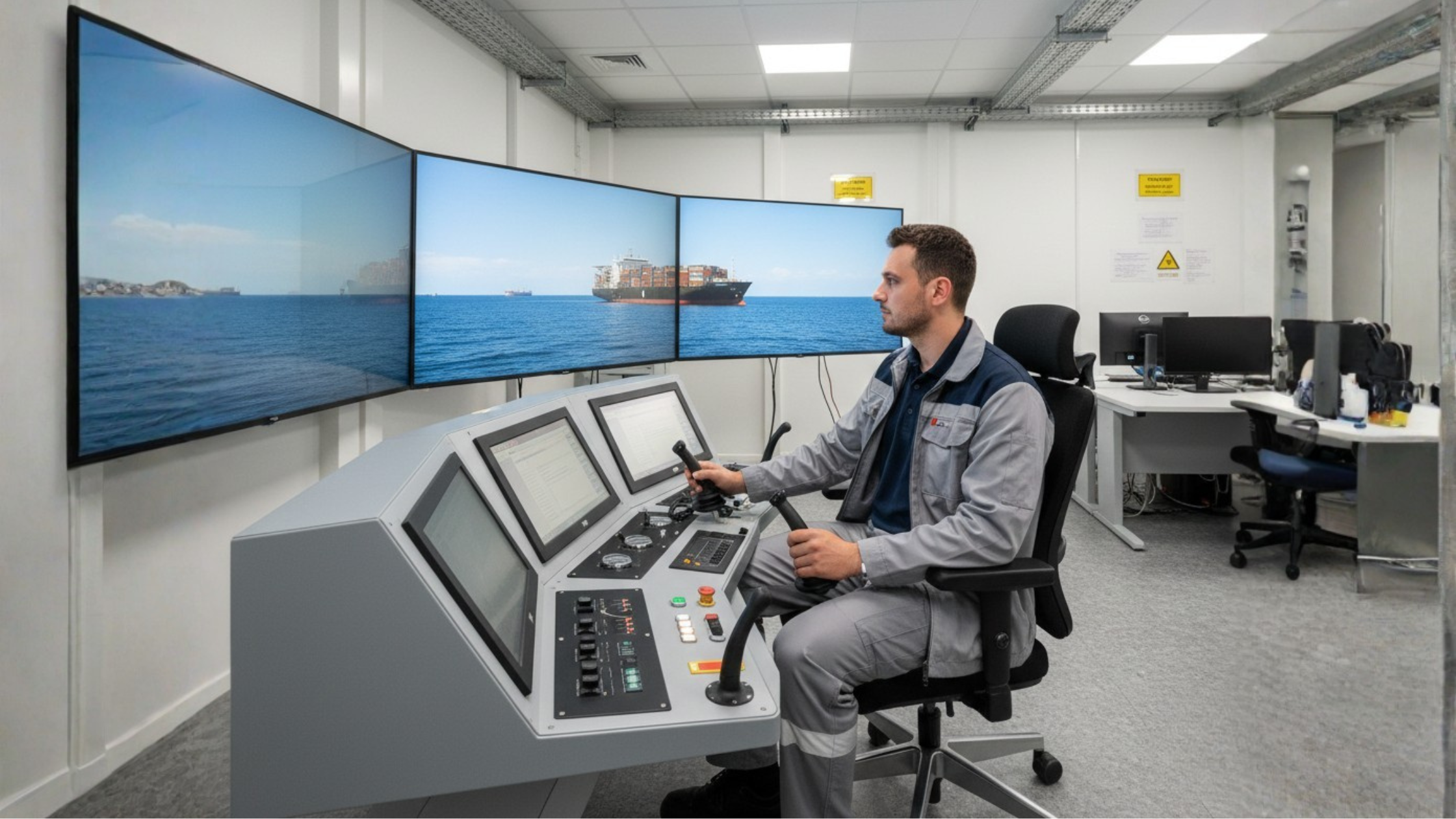
Offshore training has always evolved alongside the industries it supports. As vessels, installations and energy systems become more complex, the way people are trained has had to change with them. Today, that change is accelerating. Simulation technology is becoming more advanced, and artificial intelligence is starting to influence how training is delivered, assessed and improved.
This shift is not about replacing instructors or removing practical training. Instead, it is about enhancing learning, improving consistency and helping people prepare more effectively for high risk environments.
Why Offshore Training Is Entering a New Phase
Offshore work demands precision, calm decision making and teamwork under pressure. Traditional classroom learning alone has never been enough. That is why simulation has long been part of offshore training, from firefighting grounds to helicopter underwater escape simulators.
What is changing now is the level of realism and feedback these systems can provide. Modern simulators are capable of recreating complex scenarios repeatedly, allowing trainees to learn through experience without exposure to real danger.
The Role of Simulation in Offshore Learning
Simulation has become one of the most effective tools in offshore safety training. It allows trainees to practice emergency responses, decision making and communication in environments that closely reflect real conditions.
Examples across the industry include:
-
Helicopter underwater escape simulators
-
Firefighting and smoke filled compartment scenarios
-
Bridge and engine room simulators
-
Offshore crane and lifting simulations
These environments help trainees build muscle memory and confidence. They also allow instructors to observe behaviour and guide improvement in real time.
Where AI Is Beginning to Influence Training
Artificial intelligence is starting to influence how simulation based training is developed and assessed. In some advanced systems, including AIGF style simulators used across parts of the maritime and offshore sectors, AI is being explored as a way to analyse performance patterns rather than make decisions.
This can include:
-
Tracking reaction times during emergency drills
-
Identifying common mistakes across groups of trainees
-
Highlighting areas where additional practice may be needed
-
Supporting more personalised learning pathways
It is important to be clear. AI in this context is not replacing instructors or deciding outcomes. Instead, it supports trainers by providing data that can improve course design and learning outcomes over time.
Why Human Instructors Still Matter
No amount of technology can replace real experience. Offshore training relies heavily on instructors who understand the pressure, unpredictability and responsibility of working at sea.
Human instructors provide context. They explain why a decision matters, how conditions change in reality and what cannot be captured fully by a simulator. AI and simulation support learning, but instructors shape it.
At SMT, training remains instructor led and scenario driven. Simulation is used as a tool to support learning, not as a replacement for judgement or experience.
Balancing Innovation With Practical Reality
Not every training centre needs the latest AI driven system to deliver effective training. What matters most is relevance, realism and quality instruction.
Thoughtful adoption of new technology means:
-
Using simulation where it adds genuine value
-
Avoiding technology for the sake of appearance
-
Ensuring training reflects real working environments
-
Keeping safety and understanding at the centre of learning
The future of offshore training will not be defined by a single technology. It will be shaped by how well training providers balance innovation with practical, experience led teaching.
What This Means for Offshore Workers
For trainees, the growing use of simulation and AI supported learning means better preparation. Training becomes more consistent, more immersive and more reflective of real offshore situations.
It also means expectations will continue to rise. Employers want evidence of competence, confidence and decision making ability. Training that combines practical scenarios with structured feedback helps meet those expectations.
Looking Ahead
Offshore training will continue to evolve as industries change. Simulation will become more refined. AI will play a growing role in understanding how people learn and where training can improve.
The challenge for the sector is to adopt these tools thoughtfully. The goal is not to impress, but to prepare people properly for work that carries real responsibility.
Recap
The future of offshore training is not about replacing people with technology. It is about using tools like simulation and AI to support learning, improve consistency and raise safety standards.
When used well, these technologies enhance what already works. They help instructors teach better and trainees learn more effectively. That balance will define the next phase of offshore training.
How is AI used in offshore training
AI is used to analyse performance data, identify learning patterns and support improvements in training design rather than replace instructors.
Are simulators replacing practical training
No. Simulators support practical training by recreating realistic scenarios in a safe environment.
Does SMT use AI driven training systems
SMT focuses on instructor led, scenario based training while monitoring how emerging technologies may support future learning.
Why is simulation important offshore
Simulation allows trainees to practice emergency responses safely while building confidence and experience.
Will offshore training continue to change
Yes. As offshore industries evolve, training methods will continue to develop alongside them.