
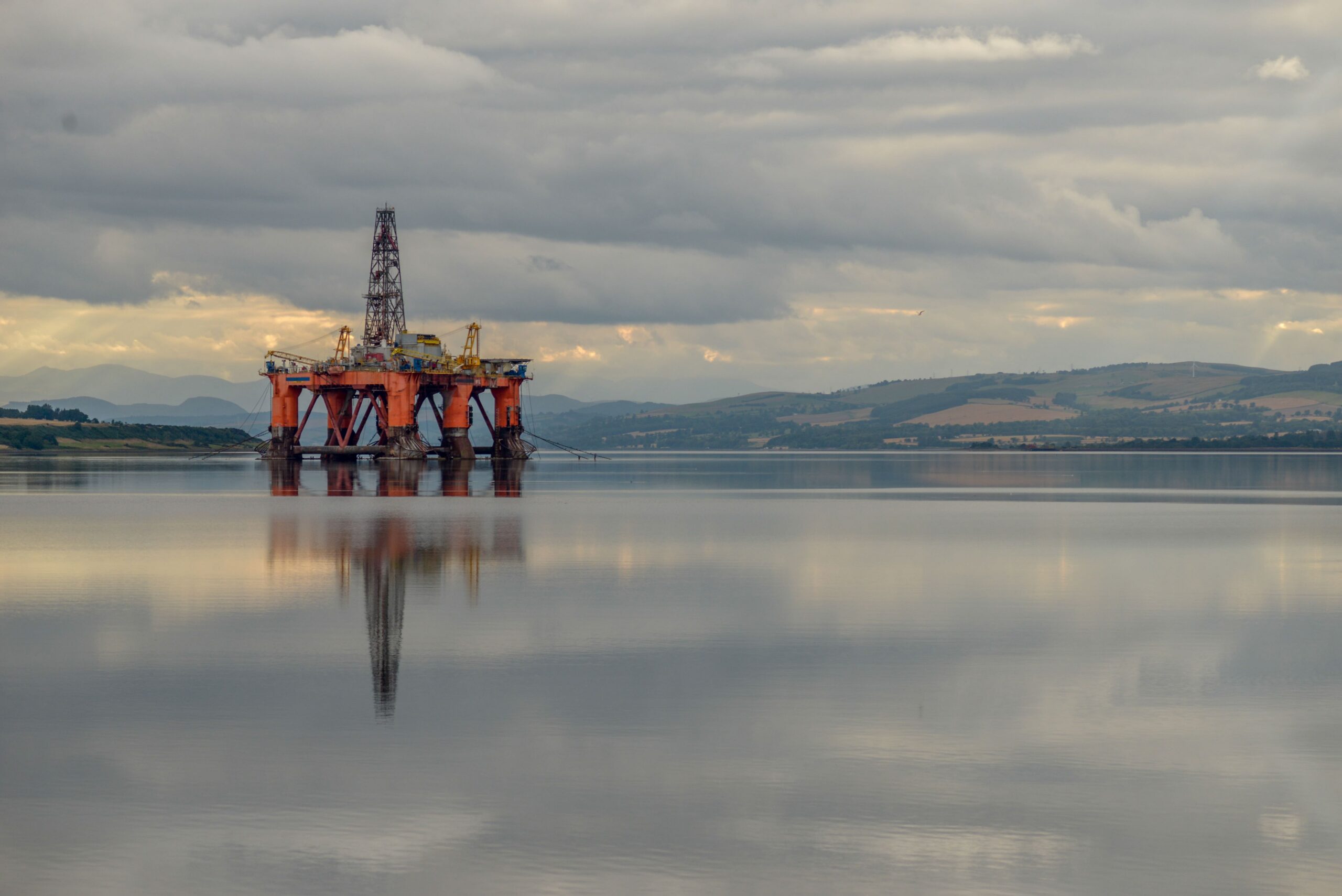
Few industries follow a change of government as closely as offshore energy, and few questions land on a new Prime Minister’s desk as quickly as the North Sea. When Andy Burnham took office, his early signals on the subject were enough to move the conversation on from where it had settled under his predecessor. Rather than commit either way, he acknowledged the region holds a crucial resource for the country and said he would take a pragmatic approach to it. For an industry that plans in decades rather than news cycles, even that measured language was significant.
What’s Actually on the Table
It is worth being precise about what is and is not being discussed, because the detail matters. For much of the last parliament, Labour policy held a firm line: no new exploration licences, with the emphasis placed instead on renewables and the wider energy transition.
What is now being weighed is narrower than a wholesale reversal. Reporting suggests the government is considering support for existing developments, the Jackdaw gas field and the Rosebank oil field off the Scottish coast among them, alongside an expansion of tie-back projects that allow further extraction close to infrastructure already in place. Officials have been careful to note that approving fields licensed under the previous government would not, in itself, breach the commitment on new licences. Whether that distinction holds under scrutiny is exactly the sort of question that will define the debate over the coming months.
A Question of Workforce, Not Politics
Stream Marine Training does not hold a position on that debate, and it would be the wrong organisation to look to for one. The arguments for and against are well rehearsed, and they are weighed differently depending on where a person stands: energy security and domestic supply on one side, climate commitments and the pace of transition on the other.
What we can speak to with some authority is what any of these scenarios asks of the people who actually work offshore, because that is the part of the picture that tends to get lost somewhere between the headlines.
An Ageing Sector With Roles to Fill
Here the numbers tell a story that sits slightly apart from the politics. The offshore workforce is ageing; close to half of UK offshore professionals are now over forty-five, and the sector faces the prospect of replacing or retraining in the region of 125,000 workers by 2033. More than seventy new developments are already planned across the North Sea before the end of the decade, a figure arrived at before the current conversation about accelerating existing projects. Whichever way policy turns, the underlying arithmetic points in the same direction: the industry needs new people, and it needs them trained.
It would be dishonest to present only that side of the ledger. Some analysts caution that traditional oil and gas roles could decline faster than renewable ones emerge to replace them, and that a skilled workforce, once dispersed, does not easily reassemble. That tension, between an industry gradually winding down and one still very much in demand, is real and it deserves to be taken seriously. But it does not change the immediate reality for anyone looking to go offshore in the next few years, whether onto a fixed platform, a drilling rig or a floating installation. The work is there, and the standard for reaching it has not moved.
Where It Begins: OPITO BOSIET
That standard begins, as it has for years, with OPITO. Before anyone travels to an offshore installation by helicopter, they are expected to hold a valid Basic Offshore Safety Induction and Emergency Training certificate, better known by its acronym, BOSIET, and it remains the recognised entry requirement across the UK and the wider North Sea.
It is not a formality. This training covers safety induction, fire safety and basic firefighting, first aid, sea survival and helicopter safety and escape, the last of these including the controlled simulation of escaping a ditched aircraft underwater. The certificate is valid for four years, after which it is renewed through the FOET refresher. The range of people it applies to is broader than many assume: electricians, scaffolders, riggers, mechanics, roustabouts, deck crew, medics and cooks all need it before they can set foot on a platform.
MIST and the Culture of Safety
Sitting alongside BOSIET is MIST, the Minimum Industry Safety Training standard, introduced across the sector in 2009. If BOSIET prepares a worker for the emergencies they hope never to face, MIST addresses the everyday: the safety culture, the hazard awareness and the shared expectations that govern life on an installation.
The two are routinely taken together, and for good reason. Between them they cover both the exceptional and the ordinary, which is a fair description of what offshore work actually involves.
The Constant Beneath the Debate
None of this depends on the outcome of the licensing question. Whether the North Sea sees a modest acceleration of existing fields or something more expansive, and whether the longer arc bends towards oil and gas or towards the offshore wind and alternative fuel sectors that will eventually stand alongside them, the people doing the work will still need to reach their installation safely and know precisely what to do when something goes wrong. That is the constant beneath a debate that is otherwise anything but settled.
It is also, as it happens, what we do. Stream Marine Training delivers OPITO-approved BOSIET and MIST as part of the broader portfolio of maritime and offshore safety training that prepares crews for the environments they work in, whatever those environments are being asked to produce. The politics will resolve themselves in their own time. The requirement to train people properly will not, and it is the part of this story we are glad to be trusted with.