
If you have found your way here searching for “AEC 1,” you are not alone. The MCA Approved Engine Course 1 is one of the more quietly important qualifications in the small vessel world, and interest in it has been growing. This guide sets out clearly what the course is, who it is for, how long it lasts and where you can train for it, answering the questions people most often ask.
What Is the AEC1 Course?
AEC1 stands for Approved Engine Course 1. It is a five-day marine engineering course approved by the Maritime and Coastguard Agency (MCA), the UK’s maritime regulatory authority. It is the first formal step toward becoming an MCA-certified Small Vessel Engineer.
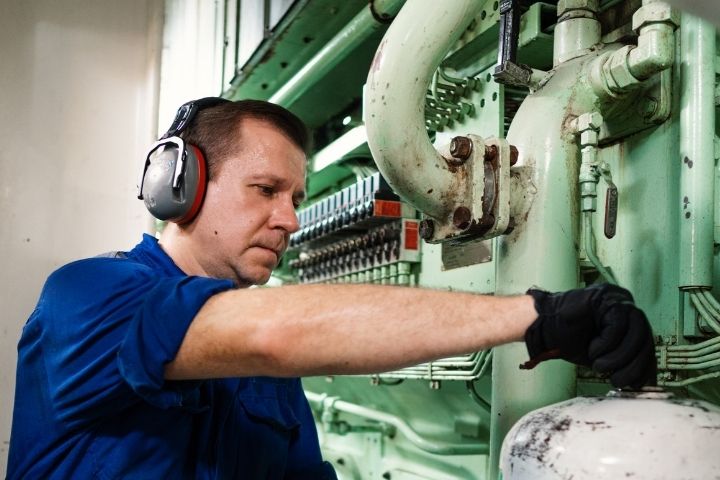
The course blends theory with genuine hands-on practical work. Over the five days, delegates strip down marine engines and auxiliaries to understand how each component works, then build up their knowledge of the core systems that keep a vessel running: the compression ignition engine, fuel, air, cooling, lubrication and electrical systems, power transmission and general engineering. The aim is not to turn you into an expert diesel mechanic in a week. Rather, it is designed so that you can carry out regular maintenance and safety checks and troubleshoot should a problem arise.
Importantly, AEC1 is a recognised qualification with a purpose. It meets the MCA Code of Practice requirements for operating and maintaining machinery on small commercial vessels and yachts, which is what gives it real value in the job market rather than being simply a training exercise.
Who Needs AEC1 Training?
This is one of the most common questions, and the answer is broad. AEC1 is aimed at anyone who needs the engineering knowledge to work on smaller vessels. The course is designed for people pursuing a career on small vessels, including fishing vessels, yachts, tugs, workboats, standby vessels, survey and research vessels, and government patrol vessels.
Under MCA definitions, a “small vessel” is a wider category than the name suggests. It covers vessels under 9,000 kW engine power and under 3,000 GT, which includes the vast majority of the world’s superyachts as well as workboats, tugs, fishing vessels, patrol vessels and research ships.
Two groups in particular tend to need it. The first is aspiring engineers taking their first step onto the engineering career pathway. AEC1 is often a minimum requirement for working as a junior or sole engineer on qualifying vessels. The second is deck crew broadening their skills. On smaller vessels, roles frequently overlap, and holding AEC1 makes you eligible for dual deck and engineer positions, which is a genuine advantage when looking for work.
How Long Does AEC1 Training Last?
The AEC1 course runs over five days, with around 30 hours of learning across that time. It is a step up from shorter introductory courses such as the RYA one-day diesel engine course, going considerably deeper into how marine engines and their systems actually work.
As for the qualification itself, on successful completion, you sit a short exam and are awarded the MCA Approved Engine Course 1 (AEC1) certificate. This is a foundational marine engineering qualification that forms the basis of your engineering record, and it opens the door to the next stage, AEC2, which continues into auxiliary systems in greater depth.
What Are the Requirements for AEC1?
The entry requirements are refreshingly straightforward. You must be over 18, and you will need to bring government-issued photographic identification on the day, in the form of a valid passport, driving licence or discharge book. You should also bring writing materials and overalls, since a large part of the course takes place in a workshop environment.
There are no formal engineering prerequisites to start AEC1, which is exactly why it works so well as an entry point. If you are ever unsure which prerequisites apply to your situation, the Maritime and Coastguard Agency’s website is the definitive place to check.
Where Can You Find AEC1 Training? (Including Scotland)
AEC1 is delivered by MCA-approved training centres, and choosing where to train usually comes down to location, availability and the quality of the facilities and instructors.
For anyone searching specifically for AEC1 training in Scotland, Stream Marine Training delivers the MCA Approved Engine Course 1 at our Glasgow facility, located three minutes from Glasgow Airport. That makes it a convenient option not only for delegates across Scotland but for anyone travelling in, whether from elsewhere in the UK or internationally. Because the qualification is MCA-approved, the certificate you earn carries the same recognition regardless of where in the country you complete it, so training in Scotland puts you on exactly the same footing as anywhere else.
Our AEC1 course combines theoretical learning with hands-on practical work on real marine engines, delivered by instructors with genuine operational experience. It is designed to give you the familiarisation, confidence and ability to diagnose and repair defects in operational machinery, which is what the qualification is really about.
Ready to Book Your AEC1 Course?
Whether you are starting out on the engineering pathway or adding a valuable string to your bow as deck crew, AEC1 is where it begins.
Course duration: 5 days
Certification: MCA Approved Engine Course 1 (AEC1)
Location: Glasgow, three minutes from Glasgow Airport
For group bookings or to discuss your training, contact our team:
Phone: +44 (0)141 212 8777
Email: bookings@streammarinetraining.com
Frequently Asked Questions
What is the AEC1 course?
AEC1, or Approved Engine Course 1, is a five-day marine engineering course approved by the Maritime and Coastguard Agency (MCA). It provides basic theoretical knowledge and hands-on practical experience of diesel engines and their systems, and is the first formal step toward becoming an MCA-certified Small Vessel Engineer. It meets the MCA Code of Practice requirements for maintaining machinery on small commercial vessels and yachts.
Who needs AEC1 training?
AEC1 is aimed at anyone pursuing an engineering role on small vessels, including yachts, fishing vessels, tugs, workboats, survey and research vessels, and patrol vessels. It suits both aspiring engineers taking their first step on the engineering pathway and deck crew looking to qualify for dual deck and engineer positions, which are common on smaller vessels.
How long does AEC1 training last?
The AEC1 course runs over five days, with around 30 hours of learning. On successful completion of a short exam, you are awarded the MCA Approved Engine Course 1 (AEC1) certificate.
What are the entry requirements for AEC1?
You must be over 18 and bring government-issued photographic identification on the day, such as a valid passport, driving licence or discharge book. There are no formal engineering prerequisites, which makes AEC1 an accessible entry point. You should also bring overalls and writing materials, as much of the course takes place in a workshop.
Where can I find AEC1 training courses?
AEC1 is delivered by MCA-approved training centres. Stream Marine Training runs the course at its Glasgow facility, three minutes from Glasgow Airport, making it convenient for delegates across Scotland, the wider UK and internationally. Because the qualification is MCA-approved, the certificate carries the same recognition wherever in the country you train.
Is AEC1 available in Scotland?
Yes. Stream Marine Training delivers the MCA Approved Engine Course 1 in Glasgow, three minutes from Glasgow Airport. Training in Scotland puts you on exactly the same footing as training anywhere else, since the MCA-approved certificate is recognised regardless of where it was completed.
What is the difference between AEC1 and AEC2?
AEC1 is the first level of the MCA Small Vessel engineering pathway, covering the foundations of diesel engines and their core systems. AEC2 is the enhanced continuation, going into auxiliary systems in greater depth with a larger practical component. Completing AEC1 is the usual route to progressing on to AEC2.