
Working offshore is not for everyone. The conditions can be demanding, the weather can be unpredictable and the work requires a level of focus that most land based jobs never ask for. Yet people continue to pursue offshore careers because the opportunities are strong, the pay is competitive and the work feels meaningful. Before you set foot on a platform or travel to an installation, you need to complete one essential qualification. The OPITO BOSIET.
The Basic Offshore Safety Induction and Emergency Training course remains the industry standard for anyone flying offshore by helicopter. Even with the sector evolving, BOSIET has not lost its importance. If anything, employers rely on it more than ever to make sure their workforce is trained, confident and ready for emergency situations.
At Stream Marine Training, we see people arrive for BOSIET from every kind of background. Electricians, riggers, mechanics, scaffolders and career changers who simply want a new path. They all need the same thing. A strong foundation in safety. That is exactly what BOSIET provides.
What the BOSIET Course Covers
The training is designed to prepare you for offshore life and give you the skills to react properly if an emergency happens. It is practical, hands on and based on real operational experience.
Safety induction and offshore culture
Delegates learn how an offshore installation functions, how to work safely around heavy machinery and how to recognise hazards. This section introduces muster procedures, alarms, permits to work and the expectations employers place on new arrivals.
Helicopter safety and underwater escape
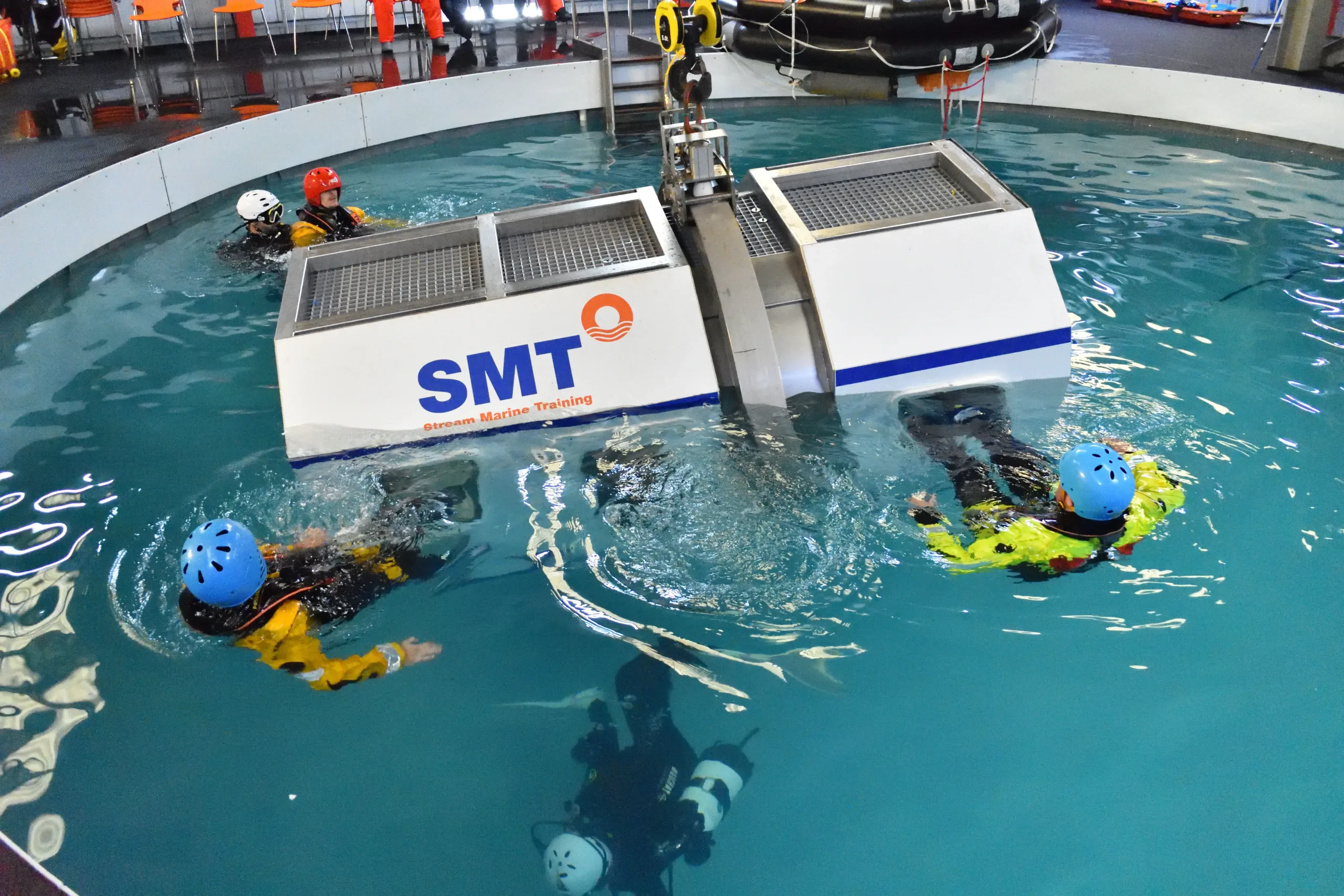
The most talked about part of BOSIET is the HUET. This is the helicopter underwater escape training delivered in a controlled pool environment using a real HUET simulator. You will practice bracing, operating exits, escaping an inverted aircraft and using an Emergency Breathing System. It looks challenging from the outside, but with guidance from SMT instructors and safety divers, most delegates surprise themselves with how quickly they adapt.
Sea survival
If an evacuation ever occurs, you need to know how to protect yourself in rough conditions. BOSIET teaches safe entry into water, how to assemble as a group, how to board a life raft and how to stay calm until rescue teams arrive.
Firefighting and self rescue
Fire is one of the most serious hazards offshore. You will learn how to recognise types of fires, operate extinguishers, use breathing apparatus and work as part of a firefighting team. This module prepares you to stay calm when visibility is low and temperature rises quickly.
First aid basics
BOSIET includes fundamental first aid skills. Delegates learn how to help injured colleagues and how to pass accurate information to medics in an emergency.
Why Offshore Workers Still Need BOSIET in 2026 and Beyond
Some people entering the industry wonder if BOSIET is still essential. The answer is yes. Offshore operators continue to rely on OPITO standards to ensure consistent training across their workforce. Regardless of how the energy sector evolves, platforms still require safe helicopter transport, effective emergency teams and trained personnel who can respond without hesitation.
It protects you and your colleagues
Emergencies offshore are rare, but when they happen you do not get a second chance. BOSIET prepares you for situations that demand fast, clear action.
It remains a strict entry requirement
Without a valid BOSIET certificate, you will not be cleared to travel offshore. No reputable operator will make exceptions.
It supports career progression
Many offshore roles begin with BOSIET. Once you have it, you can work toward FOET, MIST, supervisory training or even transfers into wind and decommissioning work.
What to Expect When Training at SMT
SMT delivers BOSIET using instructors who have worked offshore, in emergency services and in maritime safety roles. They understand the pressure people feel before starting HUET or firefighting drills, and they know how to build confidence step by step.
We train with purpose, but we keep the atmosphere friendly. Delegates learn more when they feel supported, not shouted at. This is why people consistently review SMT as approachable, knowledgeable and enjoyable to train with.
Our facilities include a modern HUET simulator, a deep diving pool, fire grounds and dedicated training classrooms. Everything is designed to feel as close as possible to the real environment while keeping the training controlled and safe.
Who Should Take BOSIET
BOSIET is required for anyone travelling to an offshore installation by helicopter. This includes:
-
Rig workers
-
Deck crew
-
Mechanics and electricians
-
Rope access technicians
-
Scaffolders and riggers
-
Catering and housekeeping staff
-
Medics and safety officers
It is also the first step for anyone wanting to enter the energy sector without previous offshore experience.
Recap
BOSIET remains the core offshore survival qualification because it works. It prepares people for emergencies, builds confidence and gives employers peace of mind that new arrivals understand how to look after themselves and the people around them.
If you want to start an offshore career or renew your emergency qualifications, completing your BOSIET at SMT gives you the right training, the right support and the right foundation for the work ahead.
FAQs
What is the purpose of BOSIET training
BOSIET prepares offshore workers for emergencies such as helicopter ditching, fires and sea survival. It is the essential entry qualification for offshore work.
How long does a BOSIET certificate last
The certificate is valid for four years. After that you must take the FOET refresher.
Is HUET training difficult
It can feel challenging, but the training is delivered safely and with full support from SMT instructors and divers. Most delegates complete it with confidence.
Do I need experience before doing BOSIET
No. Many offshore workers begin with no prior experience. BOSIET is designed for beginners.
Is BOSIET still required for offshore jobs
Yes. Offshore operators continue to require valid BOSIET certification for all personnel travelling by helicopter.