
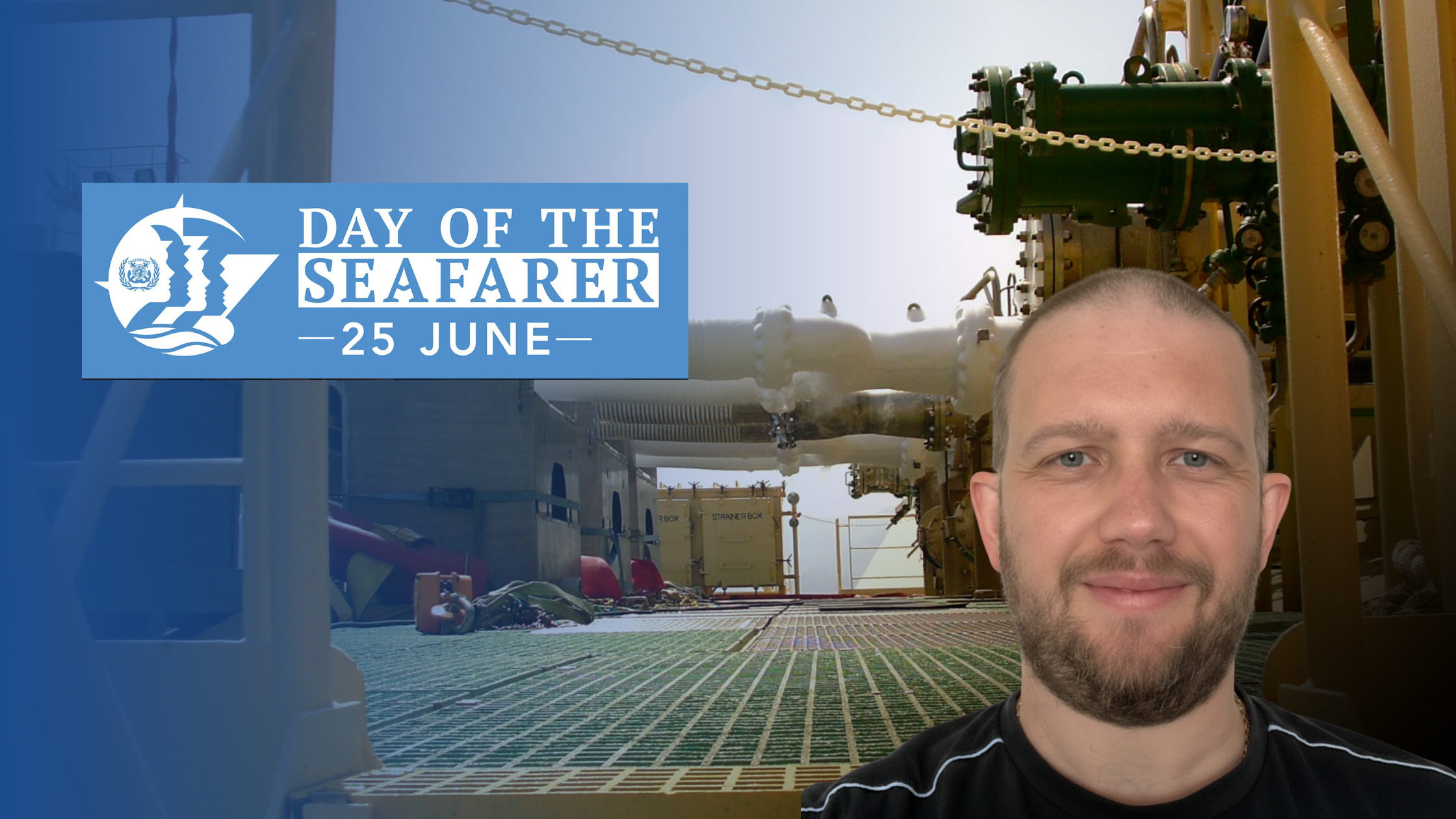
Almost everything in the room around you arrived by ship. The phone in your hand, the coffee in your cup, the gas that heated the water for it — most of it crossed an ocean before it reached you, carried by people you will never meet, working months at a time, far out of sight.
This year’s Day of the Seafarer theme “Carrying world trade. Carrying the risks.” is a reminder of both halves of that bargain. Seafarers move the world. They also shoulder the danger of doing so. Few people understand both sides as clearly as our technical training instructor, Iain Bonehill. Iain spent the best part of two decades at sea before coming ashore to join Stream Marine Training, where he now prepares the crews who will operate the next generation of alternative-fuelled ships.
A leaflet, and the start of a career
Iain’s life at sea began, improbably, in a woodworking class.
“I had no idea what I wanted to do with myself after school, but I knew I liked the technical subjects,” he says. One day his sixth-year woodworking teacher – himself ex-merchant navy – handed out a leaflet from Shell Shipping looking for cadets. Iain applied, was selected, and at 17 went straight from secondary school into an engineering cadetship. Three years later, he qualified.
After a short spell working offshore, he joined Chevron as a third engineer. A single trip on an oil tanker followed before a move to a liquefied petroleum gas (LPG) carrier, where he took over as cargo engineer; responsible for the maintenance and operation of all the cargo machinery. “This was quite a jump from one contract as third engineer,” he admits, “but that was the way it worked back then, and I really enjoyed the role.”
He spent around four years on LPG before moving to liquefied natural gas (LNG) carriers as a gas engineer – by then a rank of its own, a step up the ladder, with his own assistant machinist. Seven years in that role across various LNG ships followed, and then promotion to first engineer.
It is worth being precise about what these vessels are. LNG carriers are cargo ships: their job is to move the gas, not to run on it. But the ships themselves burn the LNG that boils off in transit as fuel, and as first engineer Iain’s work shifted from the cargo to those gas-burning engines. The result was an unusual breadth of experience – LNG across its entire life cycle aboard a vessel, from loading and discharge to storage and consumption as fuel.
The trade the world rarely sees
For all those years carrying it, Iain says the sheer importance of the work only truly landed once he came ashore and began to teach.
“It didn’t really hit home until I started teaching at SMT how vital shipping is to the world. We carry 85 to 90 percent of goods around the planet. Without shipping, we’d be lost.”
His own runs traced one of the great arteries of the energy trade – loading in Australia, discharging in Japan, South Korea or China. The day-to-day, he is honest enough to admit, could be monotonous: “pretty boring, unfortunately, at least from the perspective of the cargo engineer.” The real work clustered around loading and discharge, with preparation beginning a couple of days before port. Checklist after checklist, every system tested and proven, because a gas carrier turns around fast – often in and out of port in under 24 hours.
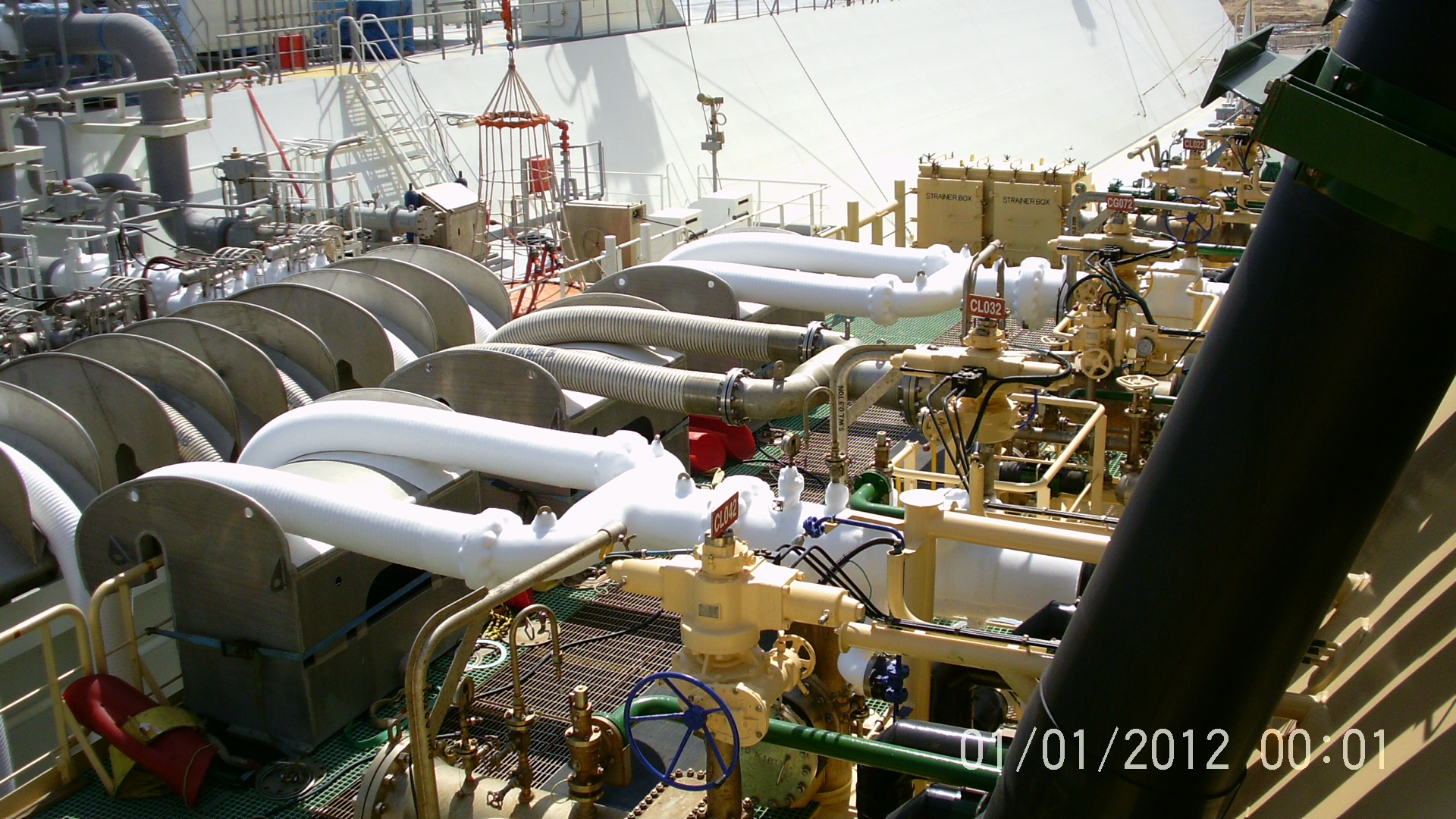
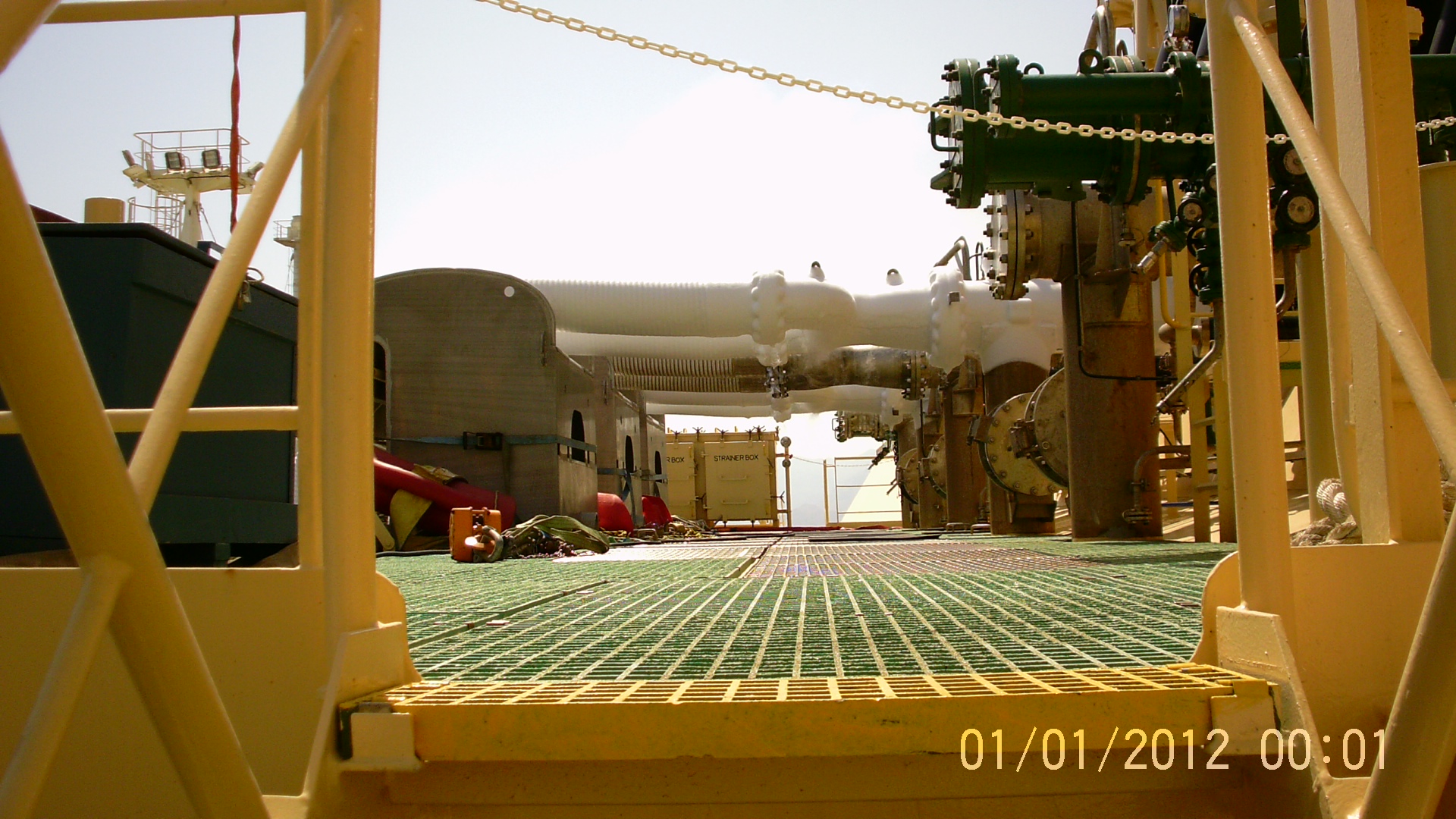
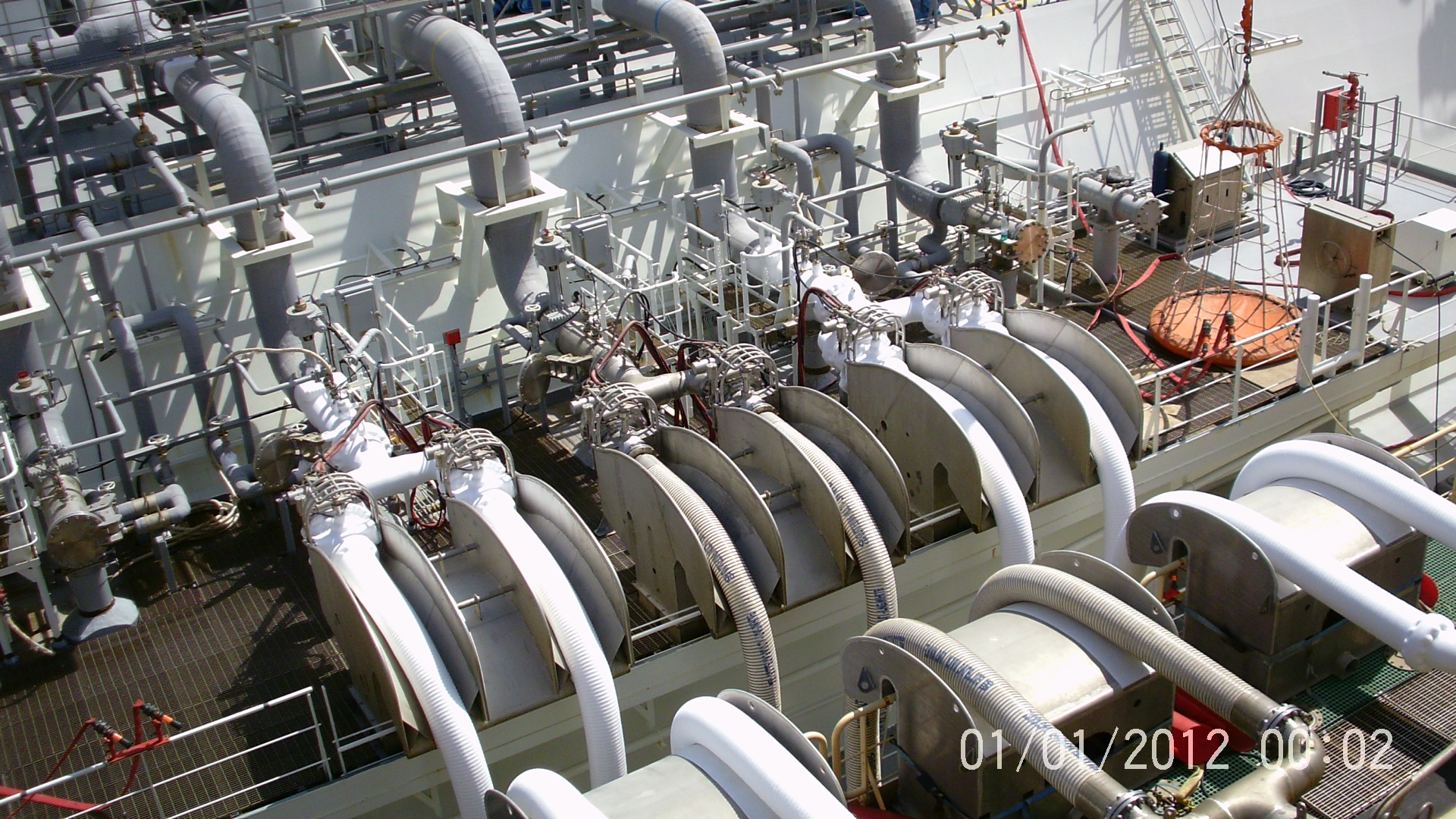
(Photos from Iain’s time on cargo ships)
And the risks that come with it
If the routine could be dull, the exceptions were anything but. “Shipping is a dangerous business,” Iain says, “both physically and mentally. You’ve got war zones and pirates, bad weather, and isolated conditions for months, even years at a time. It takes a special person to want to join the merchant navy.”
He is not speaking in the abstract. Over his career he was chased by pirates, came within seconds of a collision or sinking on more than one occasion, and left Japanese waters just hours before the 2011 tsunami that triggered the Fukushima meltdown.
And yet the risks he keeps returning to are not the dramatic ones. They are quieter, and in some ways harder. Modern communications, he points out, have all but solved the isolation that defined the job twenty years ago, but being able to speak to the people you love without seeing them for months at a time is a strain of its own. Hardest of all is what happens when something goes wrong at home.
“If there is a personal tragedy at home, a seafarer may not be able to get off the ship, due to location or a lack of available personnel to relieve them.” He watched it happen to several of his crew. “It was horrible to see, but an unfortunate condition of being potentially thousands of miles from home.”
Those experiences shaped how he thinks about safety, and about training. “You only truly understand the dangers after a near miss that could have caused you, or worse, somebody else, serious harm,” he says. “It’s human nature to make mistakes. We’ll never be perfect. The more realistic you can make the training, the more effective it will be.”
He points to the five-yearly refresher training now required under STCW. Before it was introduced, a seafarer trained once, at the start of their career, and did little more than onboard drills thereafter – which meant some had been at sea for decades on basic drills alone. “When the rules changed and they had to come somewhere like SMT and train in realistic conditions, it was eye-opening for them.” His one frustration is that the industry tends to learn the hard way: change, too often, “usually requires a catastrophic failure or loss of life to initiate.”
Coming ashore
Iain’s decision to leave the sea was a personal one. His father developed stomach cancer, and three-month contracts away from home no longer made sense. He took a job in the North Sea on one-month rotations to stay closer to family, and after a single trip, the offer from Stream Marine Training arrived. He has been ashore, training, ever since.
New fuels, familiar foundations
That experience is now pointed squarely at shipping’s biggest challenge: how to decarbonise. The industry is turning to a new generation of fuels, methanol, ammonia, hydrogen and LNG among them, and they behave very differently from the heavy fuel oil and marine gas oil that have powered ships for generations.
“These new fuels are fundamentally different,” Iain says. “They are more hazardous to work with, and may be cryogenic or toxic. They require different storage systems that may be pressurised.” None of which, he is quick to add, is beyond the people who work at sea. “It isn’t beyond the abilities of the highly qualified and professional people who do this job. That’s why it’s so important that we get the training right.”
Here his career comes full circle, and it is worth understanding why his background matters so much. The ships Iain sailed were governed by the IGC Code, the international rulebook for vessels that carry liquefied gas as cargo. The ships he now trains crews for fall under the IGF Code, which governs vessels that use those gases, and other low-flashpoint substances, as fuel. The two are closely related by design.
“We’ve been carrying LNG as cargo for decades without incident, because of the safety mechanisms built into the ship through the IGC Code,” he explains. LNG carriers hold one of the best safety records in merchant shipping. “We’ve taken those tried-and-tested safety mechanisms and applied them to LNG-fuelled ships via the IGF Code – we essentially copy-pasted the relevant parts of the IGC Code across.” The fundamentals, he notes, are the same on either kind of ship: tanks, pipes and pumps.
The training itself is about making seafarers fully aware of those hazards, more importantly, of the mitigations designed to counter them. New tools such as simulation and virtual reality will play a growing part in the years ahead. But the field is still young. “We’re relatively early in the training’s development,” Iain says, “and we need the IMO and other international bodies to develop more concrete guides and models, so that the same standard is held to worldwide.”
For the engineers most affected, he expects a learning curve rather than a reinvention. “The fundamentals of engineering still apply,” he says. The real change is one of mindset: accepting that these fuels are more hazardous to handle – “that’s the price of their environmental benefits” – while trusting that the safeguards built into the IGF Code are proven to bring those hazards down. Follow the rules, he argues, and the new fuels will be every bit as safe as the ones they are replacing.
What he’d want you to know
What Iain would most want people to take from all of this, on Day of the Seafarer, is reassurance grounded in experience. LNG is the most established of the alternatives today, and the industry already knows how to handle it safely. Methanol and ammonia will bring their own challenges as they gain ground, but these are substances the world’s ships have carried as cargo for many years. The knowledge exists.
“The knowledge is there to make these safe and sustainable fuels,” he says. “We just have to make sure it’s passed on to the seafarers who will need it in the years to come.”
That, in the end, is the thread running through his whole career, from a leaflet in a woodworking class to a classroom at Stream Marine Training. The world’s trade still moves on the backs of seafarers, and it always has. The fuels are changing, and the risks are changing with them. The work now is to make sure the people carrying them are ready.