
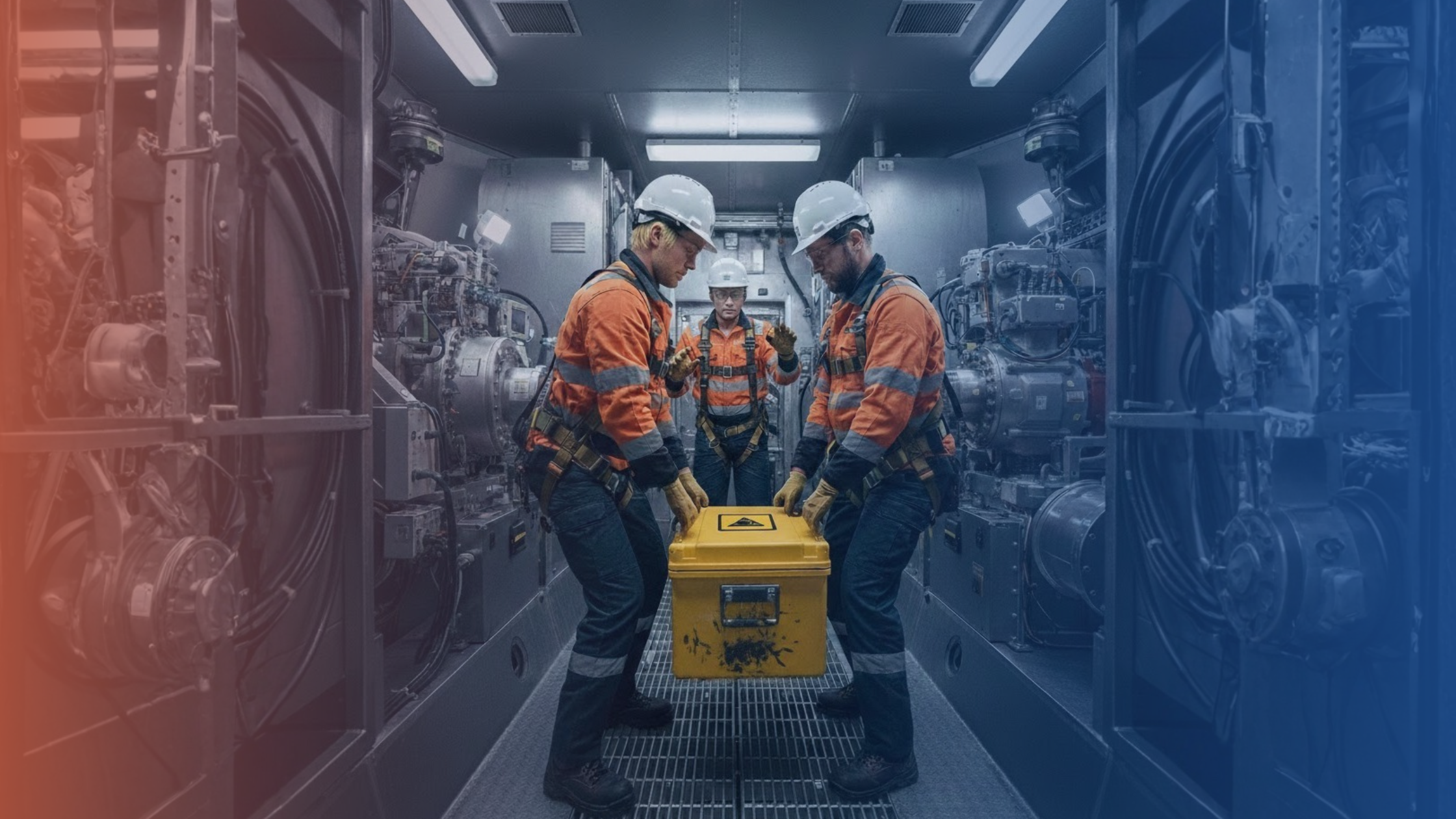
If you are searching for GWO manual handling, chances are you already understand the wind industry requires specific training. What is less clear is whether you need the full GWO Basic Safety Training package or just the manual handling module on its own.
We speak to technicians every week at Stream Marine Training (SMT) who are in this exact position. Some already hold valid GWO certificates but one element is due to expire. Others have moved employer and been told they “just need manual handling updated.” Some are experienced engineers stepping into wind roles and want to ensure they meet compliance without booking unnecessary training.
This guide focuses specifically on GWO manual handling training, when you need it as a standalone course, and why it remains one of the most important injury prevention modules in wind roles.
What Is GWO Manual Handling?
GWO Manual Handling is a half-day module developed by the Global Wind Organisation (GWO). It forms part of GWO Basic Safety Training, but it can also be delivered as a standalone course where required.
The purpose is straightforward: reduce musculoskeletal injuries in the wind industry.
Wind technicians operate in confined nacelles, climb vertical ladders, lift tools and components in awkward positions, and often work offshore where medical support is not immediately available. Manual handling injuries remain one of the most common causes of lost working time across industrial sectors, and the wind industry is no exception.
The GWO manual handling module focuses on:
-
Safe lifting and carrying techniques
-
Risk assessment before movement
-
Team lifting and communication
-
Recognising hazardous postures
-
Preventing long-term strain injuries
It is practical, scenario-based and tailored to wind turbine environments rather than generic warehouse-style training.
Why Manual Handling Is So Important in Wind Roles
Manual handling in wind energy is not the same as lifting boxes in a storeroom.
Picture working inside a turbine nacelle. Space is restricted. Surfaces may be uneven. You are wearing PPE. You may have climbed 80 metres vertically before you even begin the task. Fatigue is already a factor.
Now add:
-
Heavy torque tools
-
Replacement components
-
Cable runs
-
Access hatches
-
Weather exposure
Improper lifting technique in this environment does not just risk a sore back. It can lead to:
-
Chronic shoulder injuries
-
Lower back strain
-
Knee and joint problems
-
Time off work
-
Long-term career impact
In offshore settings, the consequences are even more serious. Injury evacuation can disrupt operations and expose others to additional risk.
At SMT, our instructors emphasise that correct manual handling is not about ticking a compliance box. It is about protecting your body over a career that could span decades.
When You Might Only Need GWO Manual Handling
This is where most of the confusion arises.
Manual handling is included in GWO Basic Safety Training. However, there are several common situations where you may only need the standalone module.
1. Your Manual Handling Certificate Is Expiring
All GWO certificates are valid for 2 years and must be refreshed before expiry. If your other BST modules remain valid but manual handling is nearing its renewal date, you may only need to book that module.
2. You Hold Partial GWO Modules
Some technicians hold individual GWO certificates from previous roles. If manual handling is missing or expired, employers may request just that element.
3. Employer-Specific Compliance Requirements
Certain wind farms and contractors audit training records closely. If a compliance review highlights a gap in manual handling validity, you may be asked to complete it independently.
4. Moving Between Onshore and Offshore Contracts
Switching contracts can trigger a recheck of your certification portfolio. Even if you have experience, employers often require up-to-date GWO documentation.
5. Contractors Asked for Proof Before Mobilisation
It is common for contractors to be asked to provide valid certification prior to site access. If manual handling is the only expired element, standalone training solves the issue quickly.
6. Injury Prevention Following Incident Review
In some cases, companies request manual handling refreshers after minor incidents or near misses. The aim is reinforcement, not punishment.
These are practical reasons why standalone GWO manual handling training exists. It allows experienced professionals to remain compliant without repeating full Basic Safety Training unnecessarily.
GWO Manual Handling vs Full GWO Basic Safety Training
It is important to be clear.
GWO Manual Handling is one component of GWO Basic Safety Training. The full BST package includes several modules designed for new entrants or those without valid certification.
Standalone manual handling is appropriate when:
-
You already hold valid BST
-
Only manual handling is expiring
-
An employer specifically requests it
If you are new to the wind industry and have no GWO certification, you will typically require the full Basic Safety Training programme rather than just manual handling.
All GWO certificates, including manual handling, are valid for 2 years and require refresher training before expiry. If a certificate expires, employers may require you to complete the full module again rather than a refresher.
At SMT, we always recommend checking your GWO WINDA record before booking to confirm exactly what is required.
Who Should Consider Booking Standalone Manual Handling?
Standalone GWO manual handling is particularly relevant for:
-
Experienced wind turbine technicians
-
Offshore service engineers
-
Rope access technicians working on turbines
-
Electrical and mechanical maintenance crews
-
Supervisors responsible for lifting oversight
-
Contractors mobilising for short-term projects
-
Training managers reviewing compliance gaps
If you are already working in wind roles and simply need to maintain validity, booking just manual handling makes operational and financial sense.
HR teams and operations managers also benefit from understanding this distinction. It allows more efficient training planning and avoids unnecessary downtime for experienced staff.
Training at Stream Marine Training
At Stream Marine Training, we are a GWO-approved training provider delivering courses from our Glasgow facility near Glasgow Airport. This location makes access straightforward for technicians travelling from across Scotland and the wider UK.
Our approach to GWO manual handling is practical and wind-specific. We do not deliver generic lifting sessions. We focus on real turbine scenarios, confined space considerations and injury prevention strategies relevant to wind roles.
Our instructors bring operational experience and understand the physical realities of wind industry work. The aim is to reinforce safe technique that translates directly to site.
You can explore our GWO courses here:
https://streammarinetraining.com/courses/cat-24-gwo/
If you are unsure whether you require standalone manual handling or the full BST package, our team can advise before booking. Contact us at bookings@streammarinetraining.com or call +44 (0)141 212 8777.
Protecting Yourself for the Long Term
Manual handling may be a half-day module, but its impact lasts far longer.
Wind roles are physically demanding. Small technical mistakes repeated over months and years become chronic injuries. Protecting your back, shoulders and joints is not just about compliance. It is about career longevity.
If your certificate is due to expire, or your employer has requested updated training, addressing it early prevents last-minute stress and keeps your mobilisation smooth.
GWO manual handling training exists for a reason. It supports safe, sustainable careers in the wind industry. Keeping it current protects both you and the teams you work alongside.
Is GWO manual handling mandatory?
GWO manual handling is mandatory for roles that require GWO Basic Safety Training. It forms part of the BST package and must be valid for compliance.
Can I do GWO manual handling without full BST?
Yes, you can complete GWO manual handling as a standalone module if you already hold valid GWO certification or only need that element refreshed.
How long is GWO manual handling valid?
GWO manual handling certificates are valid for 2 years and must be refreshed before expiry.
Do I need to refresh manual handling every 2 years?
Yes. All GWO certificates, including manual handling, require refresher training every 2 years to remain valid.
What happens if my GWO manual handling certificate expires?
If your certificate expires, employers may require you to complete the full manual handling module again rather than a refresher.
How long does GWO manual handling training take?
GWO manual handling is a half-day course delivered as a practical session focused on safe lifting in wind industry environments.
Do I need full GWO Basic Safety Training if I am new to wind?
Yes. New entrants to wind roles typically require the full GWO Basic Safety Training package rather than standalone manual handling.