
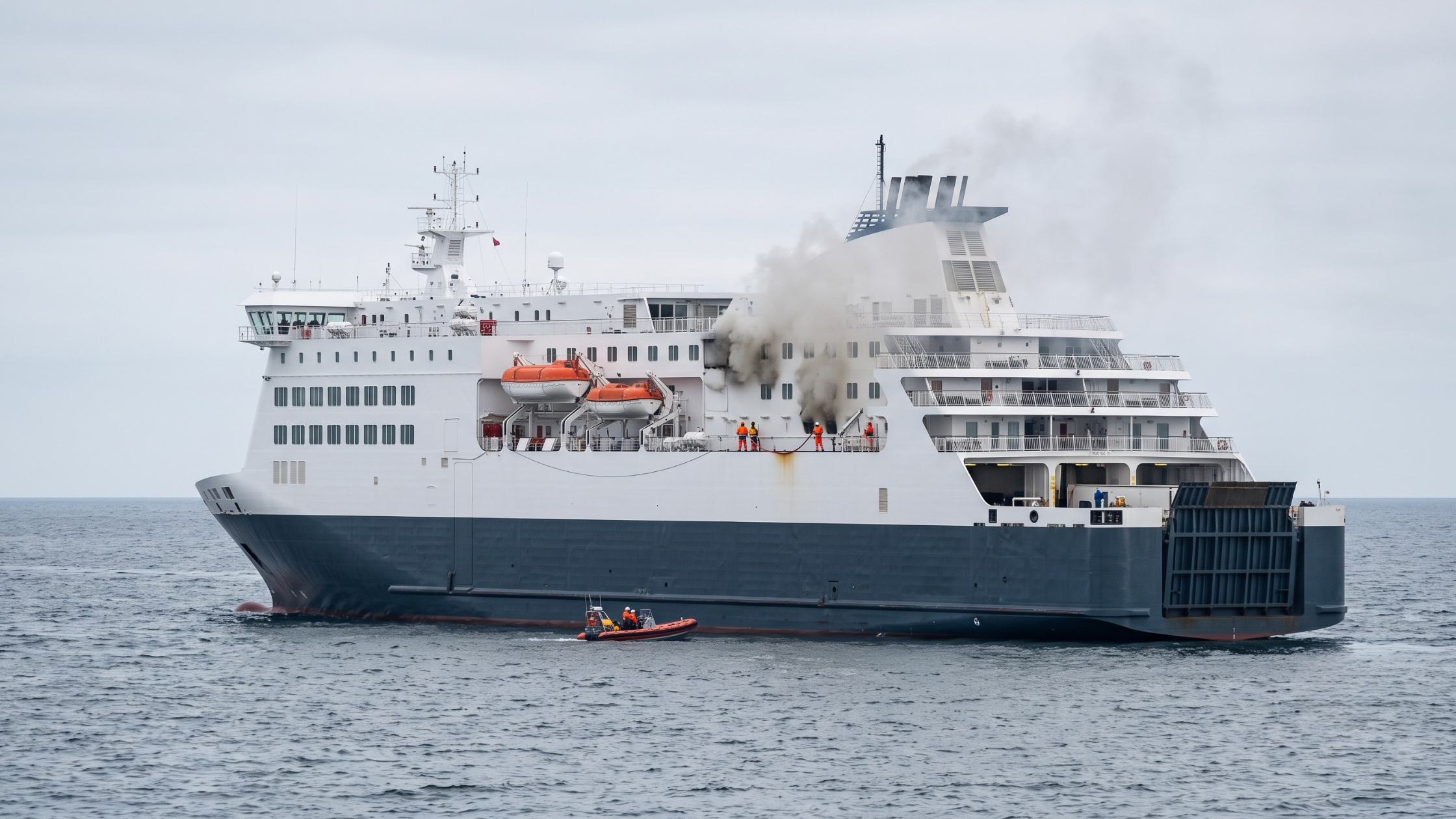
Beyond Cargo: A Growing Risk in Passenger Spaces
When lithium-ion battery fires make the headlines, the focus is usually on cargo. Electric vehicles, battery storage systems and containerised shipments dominate the conversation because the consequences can be significant and highly visible.
For cruise ships and passenger ferries, however, one of the fastest-growing battery risks is carried onboard by passengers themselves.
Every sailing now departs with thousands of lithium-ion batteries distributed throughout cabins, lounges, restaurants and public spaces. Smartphones, laptops, tablets, smartwatches, cameras, power banks, e-cigarettes and mobility aids have become everyday travel essentials. Individually, these devices present a relatively low risk. Collectively, they represent a fire hazard that deserves greater attention across the passenger shipping industry.
Unlike cargo, these batteries are located where people sleep, gather and evacuate. That fundamentally changes both the operational challenge and the priorities during an emergency.
The Scale of the Challenge
The number of battery-powered devices onboard passenger vessels has increased dramatically over the past decade, with no sign of slowing down.
A family of four might board with a dozen or more rechargeable devices before accounting for spare batteries, wireless accessories or portable chargers. Multiply that across several thousand passengers and crew, and even a single voyage can involve tens of thousands of individual lithium-ion cells.
The overwhelming majority will never present a problem. Modern batteries are generally safe when manufactured correctly and used as intended.
However, failures do occur.
Physical damage, manufacturing defects, exposure to heat or moisture, poor-quality replacement batteries and incompatible charging equipment can all increase the likelihood of a cell entering thermal runaway. Although rare, when it happens the consequences can develop rapidly.
Power banks deserve particular consideration. They store significant amounts of energy, are frequently transported in luggage, and are often charged overnight or left unattended. Counterfeit or poorly manufactured products can introduce additional risks where protective circuitry is absent or substandard.
Why Passenger Areas Present a Different Risk
The behaviour of a lithium-ion battery fire is well understood. Thermal runaway can generate intense heat, release flammable gases and continue producing heat even after visible flames have been extinguished. Re-ignition remains a key consideration throughout the response.
What makes passenger vessels unique is not the chemistry, but the environment.
Accommodation spaces are compact, enclosed and occupied around the clock. Public areas bring together large numbers of passengers, while corridors and stairways form critical escape routes that must remain clear during an emergency.
A battery failure inside a cabin is therefore more than an isolated equipment fire. Smoke can affect neighbouring accommodation, evacuation routes may become compromised, and crew must manage both the developing incident and the safety of hundreds or even thousands of passengers.
The presence of toxic combustion products further complicates the response. Early recognition and prompt intervention become essential, particularly in enclosed spaces where smoke and gases can accumulate quickly.
Early Recognition Matters
Battery fires rarely occur without warning.
A device may become unusually hot during charging, emit an unfamiliar chemical odour, begin swelling, leak, hiss or produce smoke before thermal runaway develops. Recognising these indicators provides an opportunity to intervene before conditions deteriorate.
For passenger-facing crew, this knowledge extends beyond emergency response.
Cabin stewards, housekeeping teams, hospitality staff and security personnel move throughout the vessel every day. They are often the first people likely to notice damaged devices, inappropriate charging arrangements or passengers expressing concern about overheating electronics.
Understanding what these warning signs mean, and knowing when to escalate concerns, can make a significant difference to the outcome of an incident.
More Than Firefighting
Traditional shipboard firefighting remains fundamental to maritime safety, and STCW training continues to provide the core knowledge and practical skills required to respond to onboard emergencies.
Lithium-ion batteries introduce additional considerations that were far less prevalent when many existing training standards were developed.
Crew need to understand how thermal runaway differs from conventional combustion, why batteries may re-ignite after appearing extinguished, the importance of continued monitoring, and the tactical decisions involved in containing an incident while protecting passengers and maintaining safe evacuation routes.
On passenger vessels, the challenge is rarely limited to extinguishing a fire. Maintaining calm, communicating clearly, protecting escape routes and coordinating an effective response across multiple departments are equally important.
An Evolving Safety Challenge
The number of lithium-ion batteries carried onboard passenger vessels will continue to grow.
As personal electronics become more powerful and new battery-powered devices enter everyday use, operators are adapting their procedures, reviewing guidance and investing in equipment and training that reflects the changing risk profile.
Battery incidents remain relatively uncommon, but the potential consequences mean they cannot be viewed simply as another electrical fire.
Understanding how these batteries behave, recognising the warning signs of failure and responding appropriately are becoming increasingly important components of modern passenger vessel safety.
Closing the Knowledge Gap
Passenger vessels have always relied on well-trained crews to protect those onboard. While passengers rightly expect to enjoy their journey without considering the technology they carry with them, operators cannot afford to overlook how that technology is changing onboard risk.
Specialist lithium-ion battery awareness training complements existing firefighting competence by helping crews recognise developing incidents, understand the behaviour of thermal runaway and respond safely and effectively.
As the number of battery-powered devices continues to increase, awareness is becoming an important part of maintaining high standards of passenger safety across the maritime industry.
If you’d like to learn more about Stream Marine Training’s Battery focused course, or discuss training for your crews, get in touch with our team.
Phone: +44 (0)141 212 8777
FAQs
1. Why are lithium-ion batteries becoming a concern on passenger vessels?
Passenger vessels now carry thousands of lithium-ion batteries on every voyage, with passengers bringing smartphones, laptops, tablets, power banks, cameras and other rechargeable devices onboard. While failures remain relatively uncommon, the sheer volume of batteries increases the likelihood of an incident. Unlike cargo, these devices are used and charged in cabins and public spaces, placing any fire much closer to passengers.
2. Which passenger devices pose the highest fire risk?
Power banks are often considered one of the higher-risk devices because they store significant amounts of energy and are frequently charged unattended. Damaged smartphones, laptops, e-cigarettes, e-bikes, mobility aids and any device fitted with poor-quality or counterfeit batteries can also present an increased risk if the battery has been compromised.
3. Why is a lithium-ion battery fire different from a conventional fire?
Lithium-ion battery fires behave differently because they can enter thermal runaway, a self-sustaining reaction that generates intense heat and flammable gases. Even after flames appear to have been extinguished, batteries may continue producing heat and can re-ignite. This means incidents require careful monitoring and appropriate response procedures.
4. Does STCW fire training cover lithium-ion battery incidents?
STCW firefighting courses provide the essential knowledge and practical skills needed to respond to shipboard fires. However, lithium-ion batteries introduce hazards such as thermal runaway, toxic gas release and re-ignition that are not typically covered in detail. Many operators therefore choose specialist battery fire awareness training to complement existing competence.
5. How can passenger vessel crews prepare for lithium-ion battery incidents?
Preparation starts with awareness. Crew should understand the warning signs of battery failure, recognise unsafe charging practices, know how lithium-ion fires differ from conventional fires and follow procedures for safe containment, cooling and ongoing monitoring. Early recognition and a coordinated response can help prevent a small incident from escalating.