If you hold a Medical Care On Board Ship certificate, keeping it valid is not optional. It is a regulatory requirement under STCW and a practical necessity for anyone responsible for medical care at sea.
At Stream Marine Training (SMT), we regularly train seafarers who are unsure when their medical care certificate expires, what the refresher involves, and whether they actually need to retake the course. This guide clears that up, plainly and accurately, based on current STCW requirements and real-world practice.
What Is a Medical Care On Board Ship Refresher?
A medical care on board ship refresher is designed for seafarers who already hold the original Medical Care On Board Ship certificate and need to renew it to remain compliant.
The refresher focuses on maintaining competence rather than teaching everything from scratch. It ensures you can still provide effective medical care onboard when professional medical help is not immediately available.
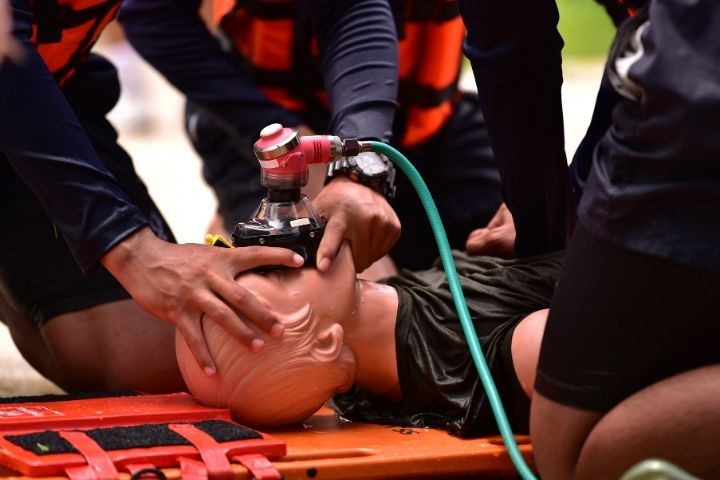
At SMT, our refreshers are practical, scenario-based, and led by instructors with genuine operational experience at sea and within emergency services. That matters, because onboard medical situations are rarely textbook.
When Do You Need to Renew Your Medical Care Certificate?
Under STCW requirements, Medical Care On Board Ship certificates must be refreshed every five years.
You will need a medical care on board ship refresher if:
-
Your certificate is approaching its expiry date
-
Your employer or flag state requires evidence of recent refresher training
-
You are returning to sea after a period ashore and your certificate has expired
Leaving renewal until the last minute can cause problems with joining a vessel or passing audits. We always recommend checking expiry dates early and booking ahead.
Who Is the Medical Care Refresher For?
This refresher is aimed at seafarers who are designated to take charge of medical care onboard, including:
-
Officers and senior crew with medical responsibility
-
Seafarers sailing on vessels without a doctor onboard
-
Personnel working on commercial shipping, offshore vessels, and some specialist craft
If you only hold Medical First Aid, the refresher requirements are different. Medical Care is a higher-level qualification with greater responsibility, and the refresher reflects that.
What’s Covered in a Medical Care On Board Ship Refresher?
A proper medical care on board ship refresher goes beyond theory. It reinforces decision-making, confidence, and practical skills.
At SMT, refresher content typically includes:
-
Assessment and management of illness and injury at sea
-
Medical emergencies and trauma scenarios
-
Use of onboard medical equipment and medicines
-
Communication with remote medical support services
-
Record keeping and legal responsibilities
We deliberately base our training around realistic scenarios. Our instructors draw on their own operational experience, which helps bridge the gap between regulation and reality.
Is the Refresher Assessed?
Yes. STCW requires seafarers to demonstrate continued competence.
Assessment during a medical care on board ship refresher usually involves:
-
Practical exercises and scenario response
-
Instructor observation and questioning
-
Confirmation that core skills and knowledge remain current
This is not about catching people out. It is about making sure you are genuinely capable of handling medical situations onboard, under pressure.
How Long Does the Refresher Take?
Medical Care On Board Ship refresher courses are shorter than the initial course, as they build on existing knowledge. The exact duration can vary depending on course structure and flag requirements.
At SMT, we keep refresher training focused and efficient, without cutting corners. You leave knowing where you stand and what is expected of you at sea.
Why Practical Training Matters for Medical Care Refreshers
Medical emergencies onboard ships rarely happen in ideal conditions. Space is limited, stress levels are high, and help may be days away.
That is why SMT places such a strong emphasis on practical, scenario-based training. Our instructors have been there. They understand how medical care works in real operational environments, not just on paper.
Refresher training should rebuild confidence, not just tick a box.
Booking Your Medical Care On Board Ship Refresher with SMT
At Stream Marine Training, we deliver medical care refresher training in Glasgow, with facilities designed for hands-on learning. We work with individual seafarers, employers, and offshore organisations to ensure training meets regulatory standards and real-world needs.
If your certificate is due to expire, acting early avoids unnecessary stress and last-minute issues with deployment or audits.
Browse available course dates here.
Frequently Asked Questions
How often do I need a medical care on board ship refresher?
Under STCW, the Medical Care On Board Ship certificate must be refreshed every five years to remain valid.
Can I renew my medical care certificate after it expires?
In many cases, yes, but requirements can vary by flag state and employer. Expired certificates can cause delays to joining a vessel, so renewing before expiry is strongly advised.
Is Medical Care the same as Medical First Aid?
No. Medical Care On Board Ship is a higher-level qualification for those responsible for medical treatment onboard. Medical First Aid covers immediate response only.
Is the refresher practical or classroom-based?
At SMT, refreshers are practical and scenario-based, supported by focused classroom discussion where needed.
Do employers accept refresher training from SMT?
Yes. Our training is delivered in line with STCW requirements and is widely accepted by employers across maritime and offshore sectors.
{
"@context": "https://schema.org",
"@type": "FAQPage",
"mainEntity": [
{
"@type": "Question",
"name": "How difficult is OPITO BOSIET training?",
"acceptedAnswer": {
"@type": "Answer",
"text": "OPITO BOSIET training is physically and mentally challenging but designed to be achievable for people with reasonable health and fitness. The most demanding element is typically the helicopter underwater escape training, which involves being submerged and inverted in a simulator. However, instructors build up the exercises progressively, starting with simple escapes before advancing to more complex scenarios. You'll receive thorough briefings and support throughout. Many participants who feel anxious beforehand find they manage better than expected once they're engaged in the training. If you can swim reasonably confidently and don't have significant claustrophobia or panic in water, you should be able to complete the course successfully."
}
},
{
{
"@type": "Question",
"name": "Can I do BOSIET if I'm not a strong swimmer?",
"acceptedAnswer": {
"@type": "Answer",
"text": "You don't need to be an excellent swimmer to complete BOSIET, but you must be comfortable in water and able to swim whilst wearing a survival suit. The training takes place in a pool, not open water, and you'll wear flotation equipment during exercises. Life jackets and survival suits provide buoyancy, so you're not relying purely on swimming ability. However, you will need to tread water, swim short distances, and manoeuvre yourself in the pool. If you're genuinely unable to swim or extremely uncomfortable in water, BOSIET will be very difficult. If you're just not a confident swimmer, practising in a pool before the course will help significantly. At Stream Marine Training, non-swimmers or weak swimmers can identify themselves to training staff and will be provided an appropriate coloured helmet, allowing our in-pool diving team to clearly identify and provide extra assistance should they require it. This ensures you receive the support needed to complete the exercises safely and successfully."
}
}
},
{
"@type": "Question",
"name": "What happens if I can't complete the helicopter escape exercises?",
"acceptedAnswer": {
"@type": "Answer",
"text": "If you're unable to complete elements of the helicopter escape training, instructors will work with you to address specific difficulties. They may allow additional attempts, provide extra coaching, or adjust the approach to help you succeed. However, successful completion of all escape scenarios is mandatory for certification—there's no partial qualification. If you ultimately cannot complete the exercises, you won't receive your BOSIET certificate. The cost of training is generally non-refundable if you voluntarily withdraw or cannot complete the requirements. This is why addressing any concerns about water confidence or claustrophobia before booking is important. Some people who struggle initially do return and successfully complete the training after additional preparation."
}
},
{
"@type": "Question",
"name": "How long before expiry should I book my FOET refresher?",
"acceptedAnswer": {
"@type": "Answer",
"text": "You should book FOET refresher training at least three to six months before your BOSIET certificate expires. This timeline accounts for limited course availability during busy periods and allows flexibility if you need to reschedule. Many offshore workers set a reminder six months before expiry to research available courses and make a booking. Your certificate must be valid on the day you complete the refresher—if it expires before you attend the course, you'll need to complete the full BOSIET again rather than the shorter FOET. Some employers provide training coordination and will notify you when renewal is approaching, but ultimate responsibility for maintaining valid certification rests with you. Missing your renewal window can mean several days of additional training and significantly higher costs."
}
},
{
"@type": "Question",
"name": "Does BOSIET training include an exam or assessment?",
"acceptedAnswer": {
"@type": "Answer",
"text": "BOSIET is primarily assessed through continuous practical observation rather than written exams. Instructors monitor your performance throughout the exercises, ensuring you demonstrate competence in each skill area. You'll need to show you can correctly don survival equipment, escape from the helicopter simulator, deploy and board a life raft, use firefighting equipment, and perform basic first aid. There may be short knowledge checks during classroom sessions to confirm understanding of safety procedures and emergency protocols, but these are typically informal rather than formal exams. Assessment is essentially pass/fail—you either demonstrate competence in all required elements and receive certification, or you don't. Instructors provide feedback throughout to help you meet the standards."
}
},
{
"@type": "Question",
"name": "Can I use OPITO BOSIET for offshore wind farms?",
"acceptedAnswer": {
"@type": "Answer",
"text": "OPITO BOSIET training is specifically designed for the offshore oil and gas industry, and offshore wind installations have different safety requirements. Offshore wind projects typically require GWO (Global Wind Organisation) training instead, particularly the GWO Basic Safety Training suite and potentially GWO Sea Survival. Some elements overlap—both industries require helicopter safety and sea survival training—but the certifications are not interchangeable. If you're pursuing a career in offshore renewables rather than oil and gas, you should investigate which GWO qualifications are required for your intended role. Some training centres offer both OPITO and GWO courses. If you might work across both industries, you may eventually need both sets of certifications, as employers will specify which standard they require."
}
},
{
"@type": "Question",
"name": "Is BOSIET recognised internationally or only in the UK?",
"acceptedAnswer": {
"@type": "Answer",
"text": "OPITO BOSIET training is recognised internationally throughout the offshore oil and gas industry. OPITO sets global standards, and BOSIET certification from an approved centre is accepted by operators worldwide, including in the North Sea, Middle East, Southeast Asia, Africa, and the Americas. This international recognition is one of BOSIET's significant advantages—your UK-obtained certification opens doors to offshore opportunities globally. However, some regions or specific operators may have additional local requirements on top of BOSIET. For example, working offshore Australia may require additional tropical sea survival training, whilst some locations require region-specific safety inductions. Always verify the complete training requirements for your specific destination, but BOSIET itself forms the widely accepted foundation for offshore safety certification worldwide."
}
},
{
"@type": "Question",
"name": "What's the difference between BOSIET and BOSIET with CA-EBS?",
"acceptedAnswer": {
"@type": "Answer",
"text": "Standard BOSIET covers core offshore safety and emergency response skills including helicopter escape, sea survival, firefighting, and first aid. BOSIET with CA-EBS (Compressed Air Emergency Breathing System) includes all the standard BOSIET content plus an additional module on using compressed air breathing systems during emergencies. CA-EBS provides breathable air in situations where the atmosphere is compromised, such as smoke-filled areas or following gas releases. Some offshore installations require CA-EBS training depending on their specific hazard assessments and emergency procedures. If you're unsure which version you need, check with your employer or the operator of the installation where you'll work. Taking BOSIET with CA-EBS initially is often sensible even if not immediately required, as it provides more comprehensive training and may be needed for future roles."
}
}
]
}