
For many people entering offshore work, the first thing they hear is that they need BOSIET training. What is less clear is the CA-EBS component that often comes with it.
Workers frequently ask us the same questions at Stream Marine Training.
What exactly is CA-EBS? When do you need it? And what actually happens during the training?
If you are travelling offshore by helicopter, particularly in the UK North Sea, CA-EBS training is typically part of the safety certification required to step onto an installation.
At Stream Marine Training in Glasgow, we deliver OPITO-approved BOSIET courses with CA-EBS using modern training facilities and instructors with real offshore and emergency response experience. In this guide, we explain what CA-EBS is, why it matters offshore, and what you can expect during training.
What Is CA-EBS and Why Does It Matter Offshore?
CA-EBS stands for Compressed Air Emergency Breathing System.
It is a small breathing apparatus designed to help offshore workers survive a helicopter ditching scenario.
Helicopters are the primary transport method for offshore installations. In the rare event of a water landing or ditching, passengers must be able to exit the aircraft safely. That includes escaping from a submerged helicopter cabin.
A compressed air emergency breathing system provides a small supply of breathable air, giving passengers extra time to orient themselves and escape underwater.
During training at SMT, delegates learn how to use this equipment as part of Helicopter Underwater Escape Training (HUET).
You will practise using the equipment while escaping a simulated helicopter in a controlled pool environment.
CA-EBS training is delivered as part of the OPITO BOSIET course, such as our:
BOSIET with CA-EBS training:
https://streammarinetraining.com/arlo/events/126-opito-basic-offshore-safety-induction-emergency-training-with-compressed-air-emergency-breathing-system-bosiet-ca-ebs/
At SMT, our instructors guide delegates through every step of the process. Many of our team have worked offshore themselves, so they understand the realities of helicopter transport and emergency procedures.
CA-EBS vs Standard EBS: Understanding the Difference
There are two common types of emergency breathing systems used during helicopter escape training.
CA-EBS (Compressed Air Emergency Breathing System)
This system provides a small cylinder of compressed air. It delivers a short supply of breathable air to help the wearer escape from a submerged aircraft.
Standard EBS (Emergency Breathing System)
This system works as a rebreather style unit, recycling exhaled air rather than providing compressed air.
The type required offshore depends on the operator and region.
In the UK North Sea, CA-EBS is the most commonly specified system, which is why most BOSIET courses delivered in the UK include CA-EBS training.
Regardless of the type used, the purpose is the same. The equipment provides extra time to escape underwater in a controlled and trained manner.
Training focuses on:
- Equipment familiarisation
- Correct donning procedures
- Breathing technique underwater
- Safe escape from a submerged helicopter simulator
At Stream Marine Training, we emphasise confidence and technique. Delegates practise in stages so that they feel comfortable using the equipment before entering the full HUET scenario.
When Is CA-EBS Training Required?
CA-EBS training is required in situations where offshore workers travel to installations by helicopter.
This includes many roles across the offshore oil and gas industry.
Common scenarios include:
- Workers travelling to offshore oil or gas platforms
- Personnel working on drilling rigs
- Offshore construction and engineering teams
- Maintenance crews and technical specialists
- Contractors visiting installations temporarily
If helicopter transport is involved, BOSIET training is typically mandatory.
In many UK operations, that BOSIET will include CA-EBS training.
It is important to understand that CA-EBS is not usually taken as a standalone course. Instead, it is integrated into the BOSIET safety training programme.
Your employer or operator will normally specify which type of breathing system is required for their installation.
For example:
- UK North Sea operations commonly require BOSIET with CA-EBS
- Other regions may require BOSIET with standard EBS instead
If you are unsure which course you need, the safest option is to confirm with your employer or recruitment agency before booking.
At SMT, our training advisors regularly help workers confirm which OPITO certification they need before starting offshore work.
What Happens During CA-EBS Training at Stream Marine Training
One of the biggest concerns delegates have is the pool session.
The reality is that training is carefully structured, controlled and fully supervised.
CA-EBS training takes place during the three day OPITO BOSIET course, or within our combined programme:
BOSIET + MIST 5-day package:
https://streammarinetraining.com/arlo/events/326-opito-bosiet-with-ca-ebs-mist-5-day-package/
At Stream Marine Training in Glasgow, the course includes several stages to prepare delegates properly.
Equipment Familiarisation
Before entering the pool, delegates learn how the CA-EBS unit works.
Our instructors demonstrate:
- How the system is worn
- How to activate the compressed air supply
- Correct breathing techniques
- Safety checks before use
You will practise fitting the unit and operating it so that the process feels natural.
Pool-Based Practical Training
Once comfortable with the equipment, delegates move to the water training stage.
This begins with simple exercises designed to build confidence.
You will practise:
- Breathing using the CA-EBS
- Submerging calmly underwater
- Maintaining orientation while submerged
Our instructors stay in the water with delegates, guiding each stage.
Helicopter Underwater Escape Training (HUET)
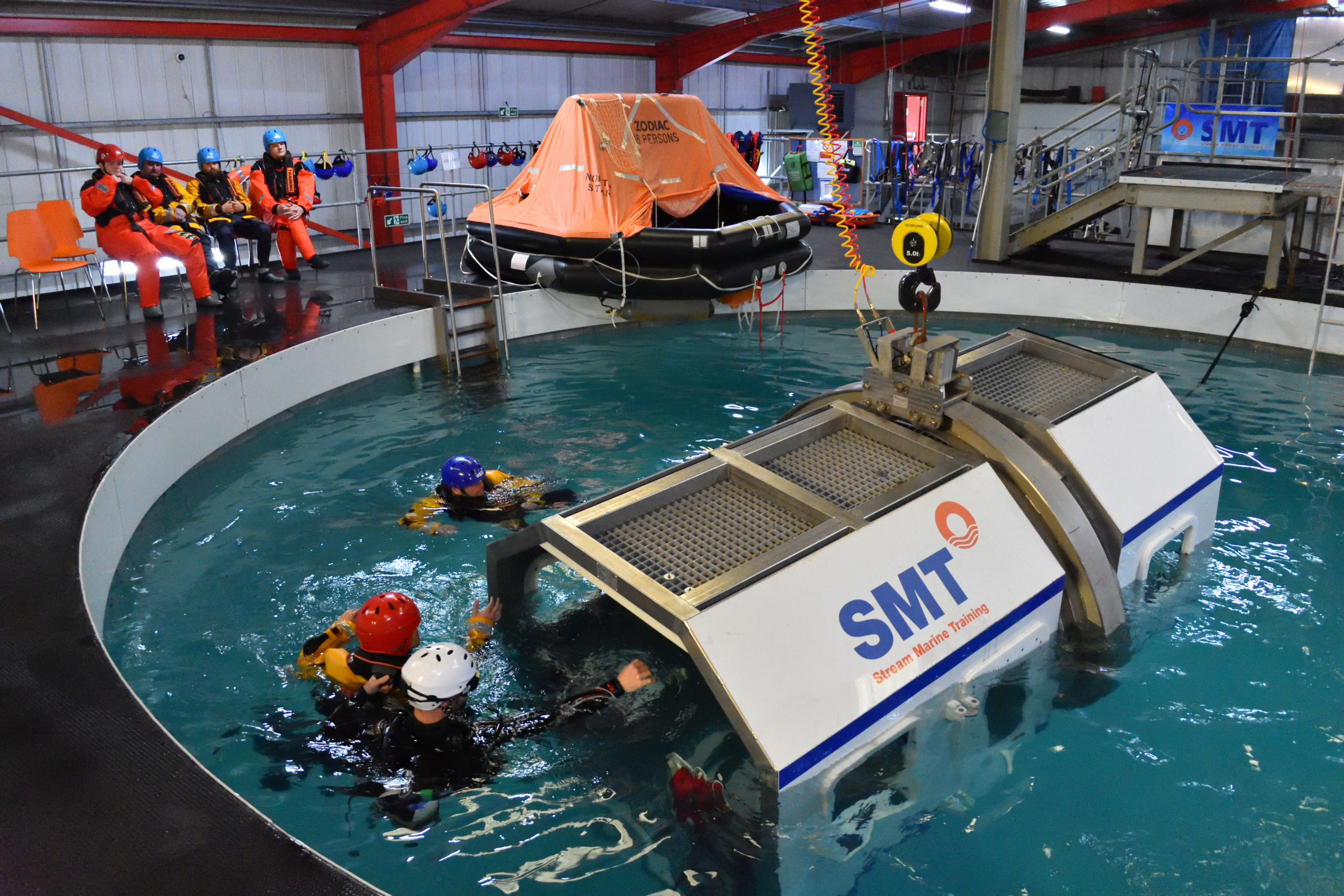
The final stage involves a helicopter simulator that submerges in the pool.
Delegates are strapped into seats inside the simulator. It then enters the water and rotates, replicating a helicopter ditching scenario.
Using the CA-EBS system, delegates practise:
- Remaining calm underwater
- Locating exit points
- Releasing seat belts
- Escaping safely from the aircraft
Although it sounds intense, the training is delivered step by step.
At SMT we maintain strict instructor supervision and safety protocols throughout the exercise.
Many delegates arrive nervous about the HUET component but leave feeling far more confident about how they would respond in a real emergency.
We also currently offer 50% off selected OPITO courses, making it easier for new offshore workers to obtain their certification.
How Long Is CA-EBS Certification Valid?
CA-EBS certification is not issued separately.
It forms part of your OPITO BOSIET certificate, which is valid for four years.
Before the certificate expires, offshore workers must complete a refresher course known as FOET (Further Offshore Emergency Training).
FOET with CA-EBS refresher:
https://streammarinetraining.com/arlo/events/232-opito-further-offshore-emergency-training-with-compressed-air-emergency-breathing-system-foet-ca-ebs/
The refresher course ensures workers remain confident in emergency procedures and helicopter escape techniques.
It is important to renew your certification before it expires.
If the certificate lapses, most workers must complete the full BOSIET course again, rather than the refresher.
At Stream Marine Training we recommend booking refresher training several months before expiry to avoid any disruption to offshore work schedules.
Who Needs CA-EBS Training?
CA-EBS training applies to a wide range of offshore roles.
Anyone travelling to an offshore installation by helicopter may need it.
Typical roles include:
- Offshore oil and gas workers
- Drilling rig crews
- Offshore construction teams
- Platform maintenance engineers
- Inspection and survey personnel
- Technical contractors visiting installations
The key factor is helicopter transport, not the job title.
Even short term contractors or specialists may need BOSIET with CA-EBS before being allowed offshore.
For workers transitioning from maritime roles, it is also common to convert STCW certification to BOSIET, something we regularly support at SMT.
Preparing for Your CA-EBS Training
If you are preparing to attend a BOSIET course with CA-EBS, a little preparation helps.
Medical Fitness
Delegates must complete a medical self declaration confirming they are fit to participate in training activities.
The course includes physical elements such as water exercises and emergency escape drills.
Swimming Ability
You do not need to be an expert swimmer.
However, you should have basic water confidence and be comfortable submerging underwater briefly.
Many delegates worry about this element, but our instructors guide the exercises gradually.
What to Bring
For training at Stream Marine Training in Glasgow, we recommend bringing:
- Swimwear
- Towel
- Comfortable clothing for classroom sessions
- Valid identification
All specialist safety equipment is provided during training.
Mental Preparation
The HUET scenario can seem intimidating when described.
In reality, training progresses step by step with full instructor support.
At SMT we take pride in creating a supportive learning environment. Our instructors explain each stage clearly and ensure delegates feel comfortable before moving forward.
If you have questions about CA-EBS training or BOSIET requirements, our team is happy to help.
Email: bookings@streammarinetraining.com
Phone: +44 (0)141 212 8777
Frequently Asked Questions About CA-EBS Training
What does CA-EBS stand for?
CA-EBS stands for Compressed Air Emergency Breathing System. It is breathing apparatus used during helicopter ditching emergencies offshore.
Is CA-EBS training a separate course from BOSIET?
No. CA-EBS training is integrated into BOSIET (Basic Offshore Safety Induction & Emergency Training) and is not delivered as a standalone course.
How long does CA-EBS certification last?
CA-EBS forms part of your BOSIET certificate, which is valid for four years. After that, FOET refresher training is required.
What’s the difference between CA-EBS and standard EBS?
CA-EBS provides compressed air, whilst standard EBS is a rebreather system. The UK North Sea commonly requires CA-EBS. Your employer will specify which system you need.
Do I need to be a strong swimmer for CA-EBS training?
You need basic water confidence and the ability to swim, but you do not need to be an expert swimmer. SMT instructors guide delegates through the pool training step by step.
Can I take just the CA-EBS part without the full BOSIET?
No. CA-EBS training is delivered as part of the full BOSIET course, not as a standalone certification.
Does Stream Marine Training offer BOSIET with CA-EBS?
Yes. SMT is OPITO approved and offers BOSIET with CA-EBS as a 3 day course, or as a 5 day package with MIST. We currently offer 50% off selected OPITO courses.
What happens if my CA-EBS/BOSIET certificate expires?
If your certificate expires, you will usually need to complete the full BOSIET course again, rather than the refresher training.