
Fire at sea is one of the most serious emergencies a crew can face. There is no fire brigade to call, no quick escape, and every second counts. That is why the STCW firefighting modules form one of the most important parts of maritime safety training.
At Stream Marine Training, our firefighting courses are taught by experts who have battled real shipboard fires and know what it takes to stay calm and act decisively. From the engine room to the accommodation decks, fire safety is everyone’s responsibility, and preparation makes all the difference.
Why Firefighting Training Matters
Ships are complex environments filled with fuel, machinery, electrical systems, and confined spaces. A small spark in the wrong place can escalate fast.
Firefighting training teaches seafarers how to recognise fire risks, act quickly, and work as a coordinated team. It is not just about extinguishers and hoses, it is about awareness, discipline and teamwork under pressure.
The STCW firefighting modules ensure every crew member understands their role in preventing, containing and extinguishing fires onboard.
The Core STCW Firefighting Modules
1. Fire Prevention and Fire Fighting (FPFF)
This is one of the core components of the STCW Basic Safety Training package. The FPFF course introduces the fundamentals of fire safety, including:
-
How fires start and spread onboard.
-
The use of different extinguishers and firefighting systems.
-
How to operate breathing apparatus safely.
-
Practical firefighting drills using live fires.
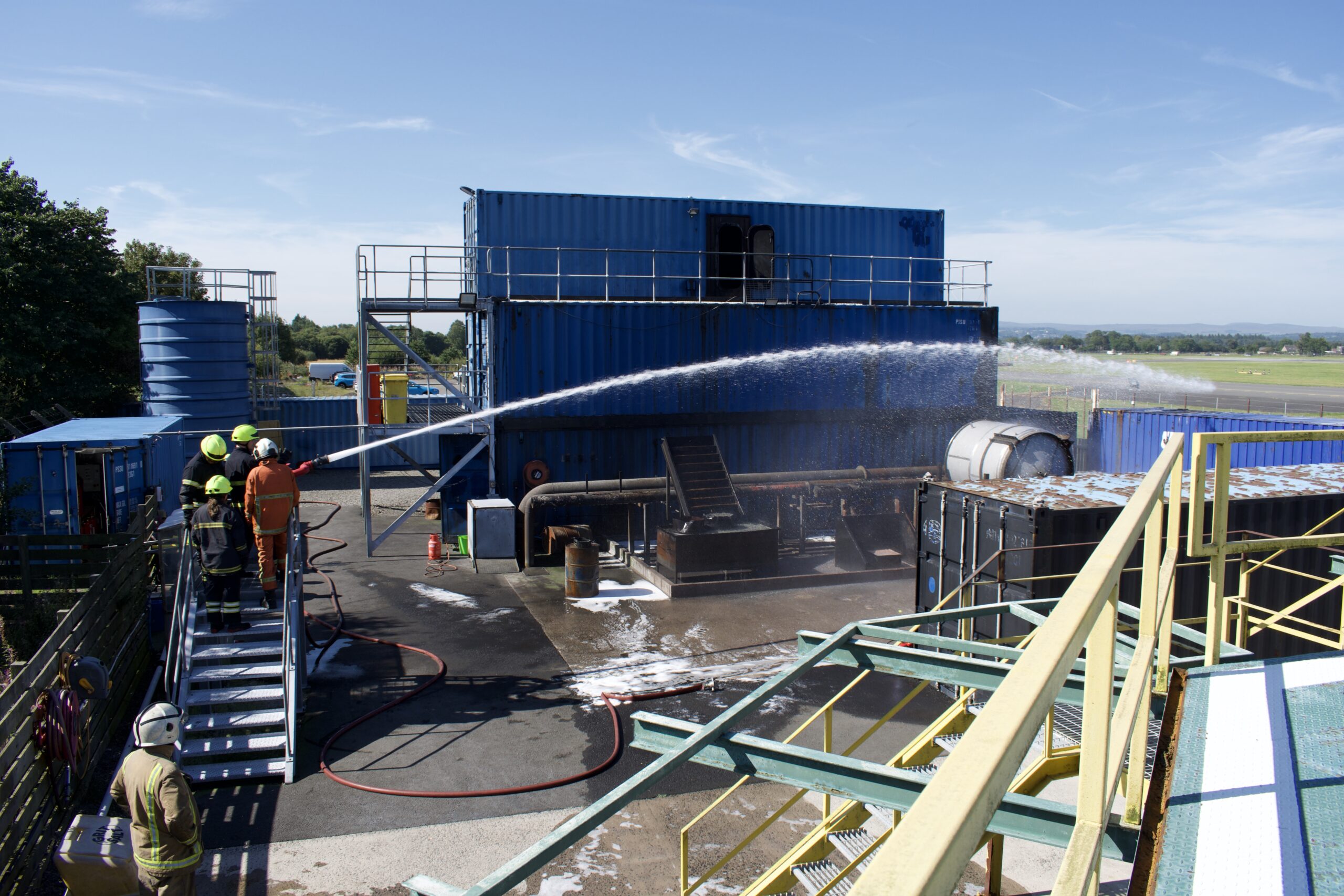
At SMT, delegates experience realistic training on our purpose-built fire ground, tackling fires on stairways, in machinery spaces and simulated ship compartments. It is hands-on, intense, and one of the most memorable parts of seafarer training.
2. Advanced Fire Fighting (AFF / AFFU)
For senior crew and those with firefighting responsibilities, the Advanced Fire Fighting course takes things further. Delegates learn to lead teams, assess risks, and manage complex onboard incidents.
The updated AFFU refresher course combines theory with live simulations and, at SMT, is available both in person and as a live webinar for added flexibility. This blended approach reduces travel time and costs while still meeting Maritime and Coastguard Agency (MCA) approval standards.
Key areas covered include:
-
Command and control during fire incidents.
-
Search and rescue operations in smoke-filled environments.
-
Maintenance of firefighting equipment and emergency systems.
-
Coordination with shore-based emergency services.
Realistic Training That Builds Confidence
The best firefighting training does more than tick a box, it builds instinct. SMT’s instructors create real-life scenarios that test communication, teamwork and composure under stress. Delegates use full protective gear, breathing apparatus and real fire simulators to ensure they leave confident and capable.
Our recent sessions captured everything from water wall techniques and stairway fires to fuel-based exercises. The emphasis is always on safe, practical learning that feels as close to real life as possible.
Who Needs Firefighting Training?
Every seafarer, regardless of rank or role, must complete the FPFF course as part of their STCW Basic Safety Training.
Those in senior or specialist positions (such as officers, engineers and emergency response leads) are required to complete the Advanced Fire Fighting (AFF) course and keep it up to date every five years.
Whether you are on a cargo vessel, cruise liner, or offshore installation, these skills are essential.
Recap
Fire safety is not something to take lightly at sea. The STCW Fire Prevention and Fire Fighting (FPFF) and Advanced Fire Fighting (AFF) modules are vital for ensuring every seafarer can act quickly, safely and effectively in an emergency.
At Stream Marine Training, our experienced instructors, realistic simulations and supportive environment turn safety training into second nature. When it comes to firefighting at sea, practice really does make perfect.
FAQs
What is STCW firefighting training?
It includes the Fire Prevention and Fire Fighting (FPFF) and Advanced Fire Fighting (AFF) modules required for all seafarers.
Who needs to complete firefighting training?
All crew members must take FPFF as part of STCW Basic Safety. Officers and team leaders must complete AFF.
How long is firefighting training valid?
Both FPFF and AFF certificates must be refreshed every five years.
What is the difference between FPFF and AFF?
FPFF focuses on basic skills for all seafarers. AFF prepares officers and supervisors to lead and coordinate firefighting teams.
Where can I complete STCW firefighting training in the UK?
Stream Marine Training near Glasgow Airport offers MCA-approved FPFF and AFF courses with realistic live-fire facilities.