
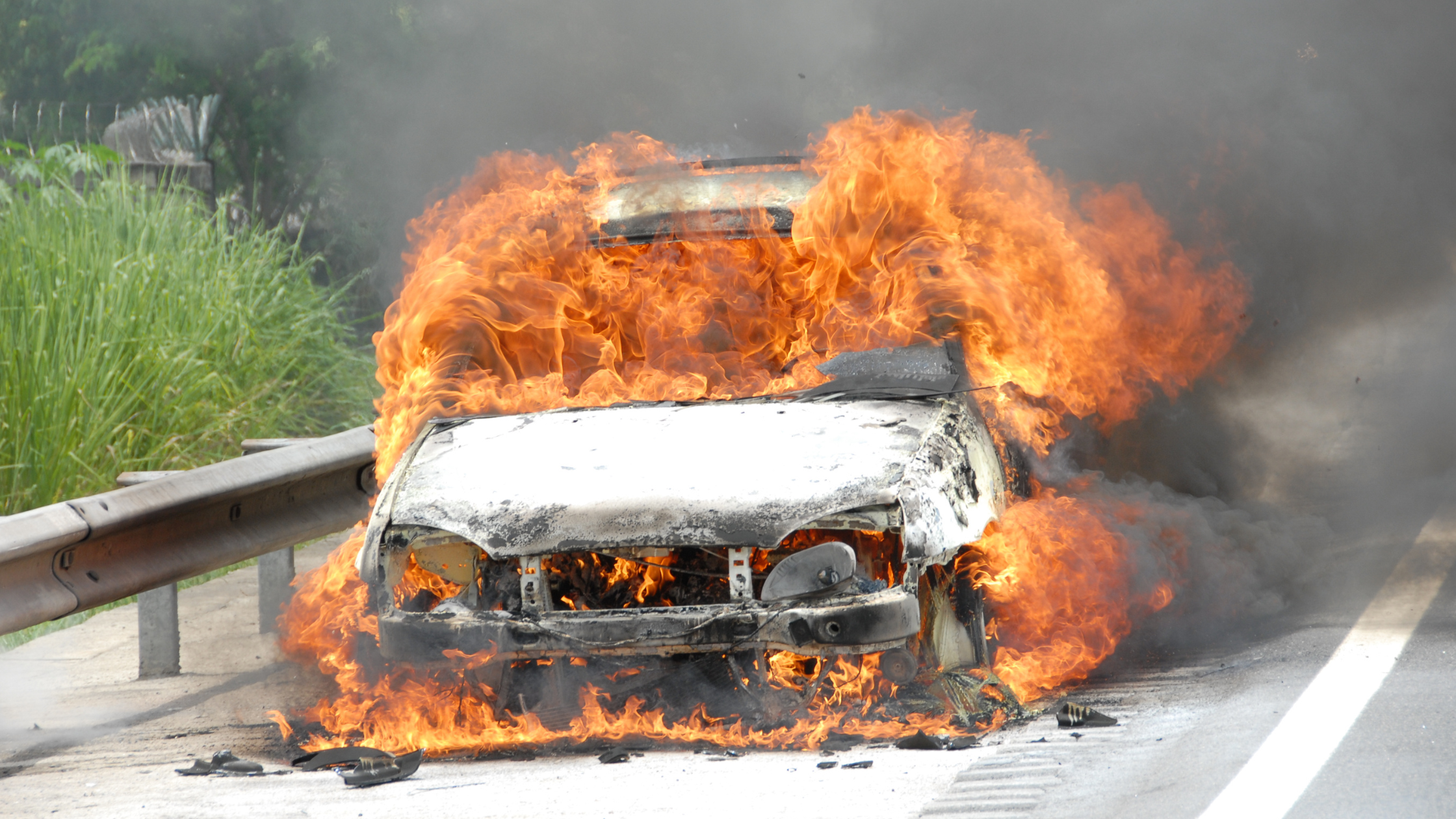
The image of a vehicle in flames is a familiar one, and most of us carry a comfortable set of assumptions about how the story ends. The fire service arrives, the hoses come out, and within a few minutes the fire is knocked down and the danger has passed. For a petrol or diesel car, that is broadly how it goes, and it is what most people, including a good number of trained firefighters, instinctively expect to happen. The moment you replace that car with an electric vehicle, however, almost every one of those assumptions quietly falls apart, and understanding why has become one of the most important shifts in modern fire safety, particularly for anyone working at sea.
Why You Can’t Fight an EV Fire Like a Normal Car Fire
The first thing to grasp is that a lithium-ion battery fire is not really a fire in the sense we normally mean. When a battery cell enters what is known as thermal runaway, it begins a self-sustaining chemical chain reaction that generates not only its own heat but, critically, its own oxygen. That single characteristic undermines almost everything we take for granted about putting a fire out. Most conventional firefighting works by removing one element of the fire triangle, and the usual target is oxygen, which is exactly what foam and fire blankets are designed to smother. A battery in thermal runaway, though, is manufacturing oxygen internally, deep inside the cells, so cutting off the surrounding air achieves very little. You can starve the atmosphere around the fire as thoroughly as you like, and the reaction inside the battery simply continues, indifferent to your efforts. This is the reason the suppression methods that would comfortably deal with a petrol fire prove so frustratingly ineffective against a battery one.
How Much Water Does It Take to Put Out an EV Fire?
With oxygen starvation off the table, the only realistic avenue left is cooling. Rather than extinguishing the fire in the traditional sense, the aim becomes pouring enough water onto the battery to pull its temperature down below the threshold at which thermal runaway can keep itself going. The difficulty lies in just how much water that demands. A typical car fire might be dealt with using a couple of thousand litres, whereas an electric vehicle fire operates on an entirely different scale. Fire services around the world have reported single EV fires swallowing tens of thousands of litres before the situation is brought under control, and in one widely reported case firefighters needed in the region of 36,000 gallons, well over a hundred thousand litres, to subdue a single electric car over the course of an hour.
What makes those staggering volumes even more sobering is that they are not always used efficiently, thanks to a particularly cruel piece of design irony. The very battery casing that protects a vehicle’s occupants from electric shock also does an excellent job of keeping water out, which means firefighters can spend considerable time and enormous quantities of water hosing the outside of a battery pack while the thermal runaway carries on, shielded, within the modules where it actually matters.
Why EV Fires Reignite Hours or Even Days Later
If there is one detail that catches people out more than any other, it is what happens after the flames appear to be gone. Because thermal runaway is a chemical process unfolding inside the cells, a battery can hold enough internal heat to reignite long after the visible fire has died away. This has happened minutes later, hours later, and in well-documented cases several days after a vehicle was declared safe, with cars bursting back into flame in salvage yards and storage compounds that assumed the danger had long passed. It is precisely why fire services have learned to treat a “finished” EV fire with real suspicion, continuing to monitor battery temperatures long after the last flame has gone and, in some cases, quarantining or even submerging the vehicle entirely. The uncomfortable truth is that with a battery fire, the absence of visible flame tells you very little about whether the fire is genuinely out. You cannot extinguish it and walk away.
Why EV Fires Are So Dangerous on Ships and Ferries
Now take every one of those challenges and move the whole scenario onto a vessel, because this is where the subject stops being a curiosity and becomes a genuine safety concern. A firefighter tackling an EV fire on land has, at least in principle, access to hydrants, additional appliances and an effectively unlimited supply of water. None of that holds true at sea. Instead you have a confined space, limited escape routes, fixed suppression systems that were designed long before anyone anticipated lithium-ion behaviour, and a crew rather than a professional brigade. The vast water volumes that land-based services rely upon are simply not available in the same way, and flooding a compartment aboard ship carries its own serious consequences for stability and safety. Layer on the toxic gases that thermal runaway releases, the enclosed decks on which electric vehicles are so often carried, and the re-ignition risk lurking in a space that cannot be easily evacuated, and it becomes clear why EV and battery fires now rank among the most serious emerging challenges in maritime safety. The techniques that genuinely matter in that environment are containment and boundary cooling, keeping the fire from spreading to neighbouring vehicles or compartments, alongside a clear-eyed tactical judgement about what can realistically be achieved, rather than a conventional attempt to simply put the fire out that was never likely to succeed in the first place.
Why Training Makes the Difference
None of this is to suggest that an EV fire at sea is hopeless, because it is not. What it does mean is that the response has to be different, informed and deliberate, and that depends entirely on crews understanding what they are actually facing. A crew that knows thermal runaway produces its own oxygen, that water serves to cool rather than smother, that re-ignition is a lasting rather than a passing threat, and that containment is frequently the realistic objective, will make far better decisions than one falling back on instincts formed around petrol fires. That understanding is exactly what proper training is there to provide, and it is why awareness on its own is no longer enough.
Stream Marine Training’s Practical Battery and EV Fire Fighting course gives maritime personnel genuine, hands-on experience of how these fires behave and how to respond to them safely, moving beyond theory into the practical realities of approach, containment, boundary cooling and tactical decision-making. As electric vehicles and lithium-ion batteries become a routine part of what vessels carry around the world, the crews who truly understand how these fires work are the ones best placed to stop a serious incident from becoming a catastrophic one.
To find out more about the Practical Battery and EV Fire Fighting course, or to book, contact our team:
Phone: +44 (0)141 212 8777
Email: bookings@streammarinetraining.com
Frequently Asked Questions
How much water does it take to put out an EV fire?
Considerably more than a conventional car fire. Where a petrol or diesel vehicle might be dealt with using a couple of thousand litres, an electric vehicle fire can swallow tens of thousands of litres before it is brought under control. In one widely reported incident, firefighters needed around 36,000 gallons, well over a hundred thousand litres, to subdue a single electric car over the course of an hour. The exact amount varies enormously depending on the vehicle, the severity and how easily water can reach the battery itself.
Can you use foam or a fire blanket on a lithium-ion battery fire?
Not effectively. Foam and fire blankets work by smothering a fire and cutting off its oxygen, but a lithium-ion battery in thermal runaway generates its own oxygen internally through a chemical reaction. Because the oxygen feeding the fire is being produced inside the cells rather than drawn from the surrounding air, smothering it from the outside achieves very little, which is why conventional suppression methods that would handle a petrol fire prove so ineffective against a battery one.
Why do EV fires reignite after they appear to be out?
Thermal runaway is a chemical process happening inside the battery cells, so a battery can retain enough internal heat to reignite long after the visible flames have gone. This has been documented minutes, hours and even several days after a vehicle was declared safe, with cars bursting back into flame in salvage yards and storage compounds. It is why the absence of visible flame tells you very little about whether a battery fire is genuinely out, and why fire services continue to monitor battery temperatures long after the fire appears finished.
Why are EV fires so much harder to fight at sea than on land?
On land, firefighters have access to hydrants, additional appliances and effectively unlimited water. At sea, a vessel offers confined spaces, limited escape routes, fixed suppression systems never designed for lithium-ion behaviour, and a crew rather than a professional fire brigade. The vast water volumes used on land are not available in the same way, and flooding a compartment aboard ship carries serious consequences for stability. Combined with toxic gases, enclosed vehicle decks and re-ignition risk, this makes EV and battery fires one of the most serious emerging challenges in maritime safety.
What is the best way to deal with a battery fire on a vessel?
Because fully extinguishing a battery fire in the conventional sense is often not realistic at sea, the techniques that matter most are containment and boundary cooling, which stop the fire spreading to neighbouring vehicles or compartments, together with sound tactical judgement about what can realistically be achieved. This requires crews who understand how these fires behave, which is exactly what practical battery and EV firefighting training is designed to provide.
Is awareness training enough, or do crews need practical EV firefighting training?
Awareness is an essential foundation, but it is no longer enough on its own. Responding to a battery fire safely depends on genuine, hands-on understanding of how these fires behave and how to approach, contain and cool them under real conditions. Stream Marine Training’s Practical Battery and EV Fire Fighting course moves beyond theory into exactly these practical realities, giving maritime personnel the experience needed to make better decisions during a real incident.