
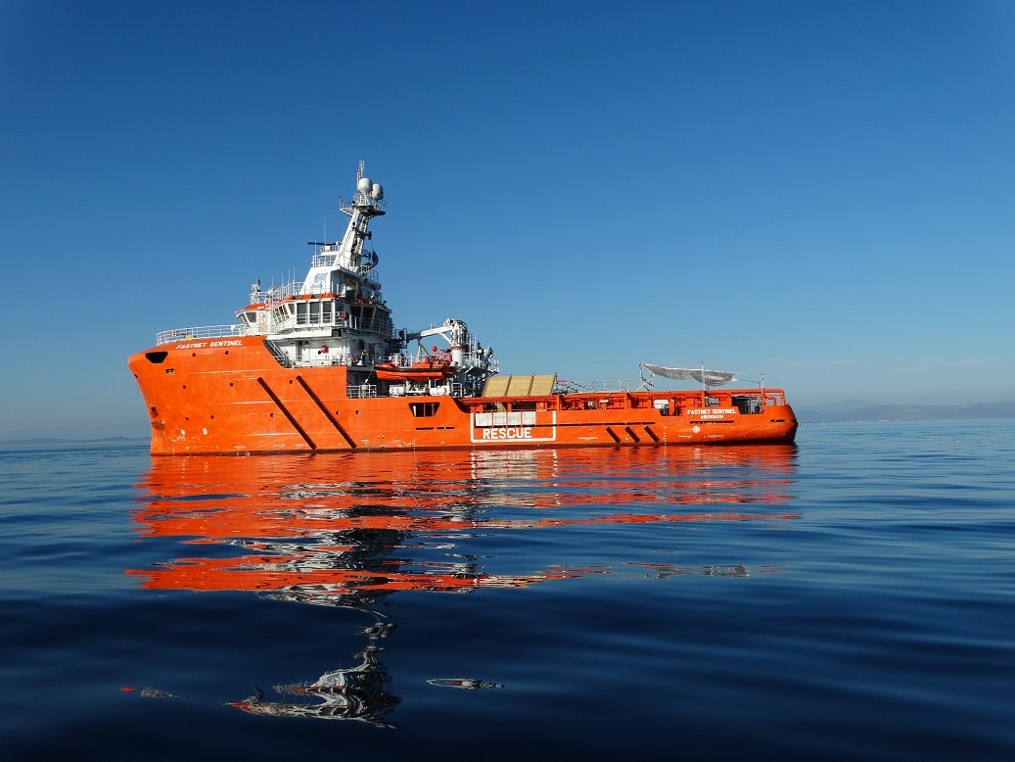
Across offshore, maritime and emergency response operations, the Coxswain role is becoming more clearly defined and more widely recognised. As vessels, offshore assets and renewable infrastructure grow in complexity, so too does the need for highly competent personnel who can take charge of survival craft, fast rescue craft and emergency response operations.
At Stream Marine Training (SMT), we have launched our Coxswain course to meet that demand. This article explains what the role actually involves, how survival craft training underpins the position, and what employers are increasingly looking for as we move into 2026 and beyond.
We see this role every week in real operational settings. It is practical, hands-on, and responsibility heavy. It is not a classroom job.
What Is a Coxswain in Offshore and Maritime Operations?
A Coxswain is the person in command of a survival craft or fast rescue craft during emergency and operational scenarios. In offshore environments, this commonly includes ERRV fast rescue craft, standby vessels, lifeboats and associated emergency response assets.
The Coxswain is responsible for:
• Safe launch and recovery of survival craft
• Command and control of rescue operations
• Vessel handling in challenging sea states
• Crew coordination and communication
• Casualty recovery and transfer
• Winch operation support and positioning
This is not an entry-level role. Coxswains are expected to operate calmly under pressure, make rapid decisions, and apply survival craft knowledge in live scenarios where mistakes carry serious consequences.
Why the Coxswain Role Is Gaining Importance for 2026
Offshore energy is changing. Oil and gas remains active, but offshore wind and renewables are expanding rapidly. Assets are further offshore, weather windows are tighter, and emergency response expectations are higher.
As a result, operators and employers are placing greater emphasis on clearly trained Coxswains who can demonstrate competence beyond basic survival craft awareness.
We are seeing this reflected in:
• Updated competence frameworks
• Stronger links between survival craft training and operational roles
• Greater demand for refresher training rather than one-off certification
The Coxswain role is no longer assumed. It is defined, assessed and increasingly audited.
How Survival Craft Training Fits the Coxswain Role
Survival craft training sits at the core of the Coxswain skillset. Under STCW and OPITO frameworks, this training covers the practical operation of lifeboats, rescue craft and emergency equipment.
Key survival craft competencies include:
• Launching and recovery procedures
• Boat handling in confined and open water
• Emergency navigation and positioning
• Crew management during abandonment scenarios
• Use of communication and signalling equipment
For Coxswains, this knowledge must be applied under pressure, not just understood in theory. That is why practical delivery and scenario-based training matter.
At SMT, our instructors are not reading from manuals. They are drawing on real offshore, maritime and emergency service experience to recreate realistic conditions.
Proficiency in Survival Craft Refresher Training and Why It Matters
One of the most misunderstood areas is refresher training. Proficiency in survival craft refresher training is not a box-ticking exercise. It exists because skills fade, procedures evolve, and operational expectations change.
For Coxswains, refresher training ensures:
• Muscle memory remains sharp
• Launch and recovery drills are current
• Decision-making stays instinctive
• Changes in equipment or procedures are understood
Employers increasingly expect Coxswains to demonstrate recent, relevant refresher training rather than relying on certificates gained years earlier.
This is especially true for ERRV and offshore rescue roles where audit trails and competence assurance are part of day-to-day operations.
Lifeboat Launch, Recovery and Rescue Operations
Lifeboat and rescue craft operations are high-risk activities. The Coxswain is responsible for controlling these phases safely, often in poor weather or limited visibility.
Training focuses on:
• Controlled launch under operational constraints
• Recovery in dynamic sea conditions
• Approach techniques for casualties and installations
• Maintaining situational awareness throughout
At SMT, we place heavy emphasis on realistic scenarios, not ideal conditions. That is where confidence and competence are built.
Winch Operations and Vessel Handling
Coxswains are often required to position craft accurately to support winch operations from helicopters or larger vessels. This demands precise vessel handling, communication discipline and situational awareness.
Our training covers:
• Holding station under winch load
• Maintaining safe stand-off distances
• Coordinating with aircrew and deck teams
• Managing risk during dynamic lifts
These are skills that cannot be learned from slides. They must be practised.
The OPITO ERRV FRC Coxswain Course at SMT
To support this emerging demand, we deliver the OPITO ERRV FRC Coxswain course from our Glasgow facility. The course is designed for those stepping into, or already performing, Coxswain duties within offshore and maritime environments.
The training focuses on real-world application, competence development and regulatory alignment. It is not sales-led. It is instructor-led.
For those ready to progress into the role, you can view available dates and course details here:
https://streammarinetraining.com/arlo/events/349-opito-errv-frc-coxswain/
Is a Coxswain Role Right for You?
This role suits people who are calm under pressure, technically capable, and comfortable taking responsibility for others. Many candidates come from offshore, maritime, emergency response or military backgrounds. We also see experienced deck crew stepping up as part of their career progression.
If you already hold survival craft certification and are maintaining proficiency through refresher training, the Coxswain role is a natural next step.
Frequently Asked Questions
What is the difference between survival craft training and a Coxswain role?
Survival craft training teaches the operation of lifeboats and rescue craft. A Coxswain applies that knowledge in command, taking responsibility for decision-making, crew management and operational control.
Do Coxswains need refresher training?
Yes. Proficiency in survival craft refresher training is essential to maintain competence, meet employer expectations, and remain compliant with industry standards.
Is the Coxswain role recognised offshore?
Yes. The role is increasingly defined within offshore emergency response frameworks, particularly for ERRV and renewable energy operations.
Where is the SMT Coxswain course delivered?
All Coxswain training is delivered at our Glasgow facility, using practical, scenario-based instruction led by experienced professionals.